Buying a Bakery in Ontario
Buying an Ontario bakery? Review recipes, allergen labels, wholesale contracts, ovens, leases and prepaid cake orders before agreeing on price.
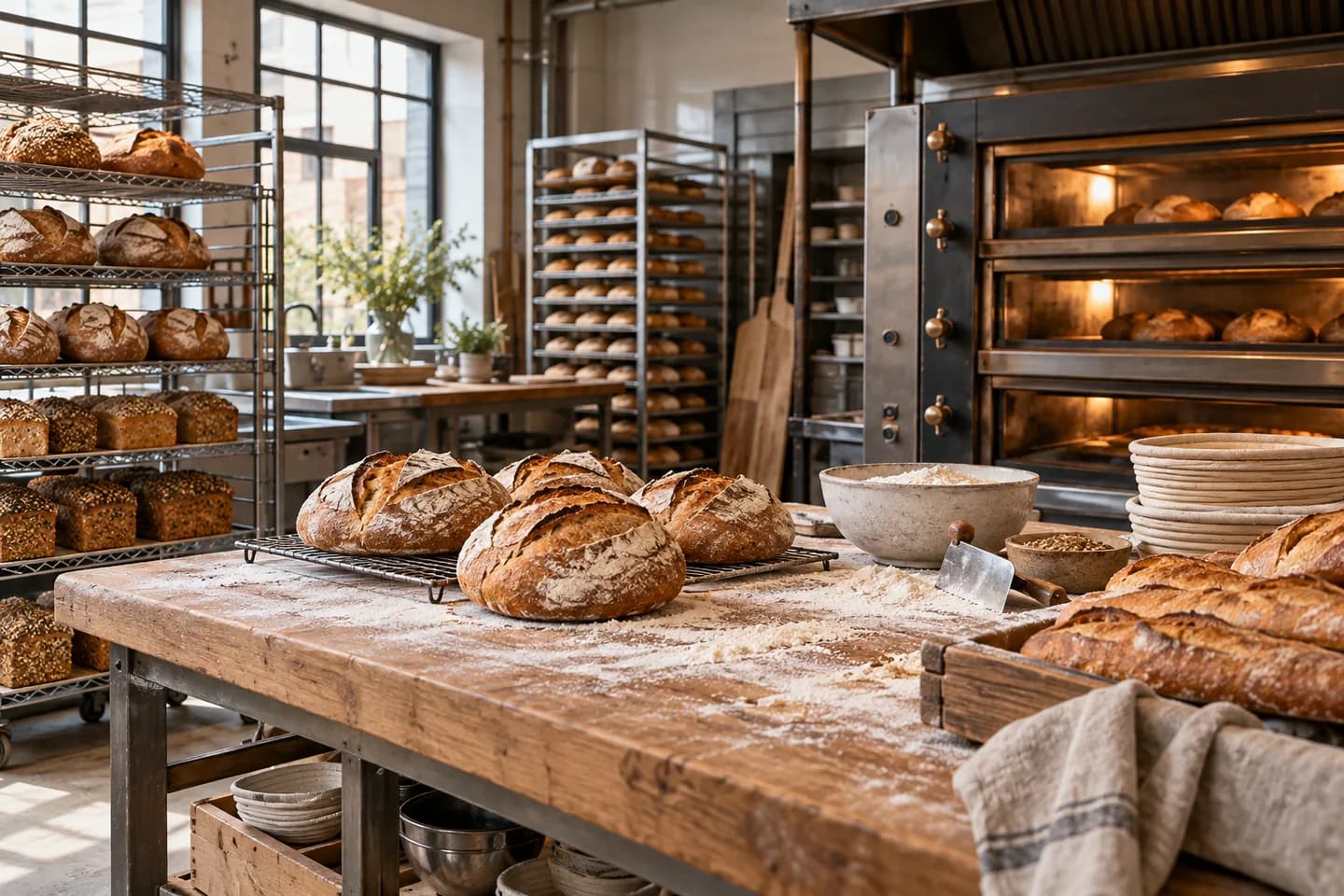
What a bakery buyer is really acquiring
Buying a bakery in Ontario means acquiring the ability to produce and sell the same products profitably after the owner leaves. The storefront and ovens matter, but so do documented recipes, dependable bakers, approved production space, wholesale customers and the money needed to fulfil orders already paid for.
Before agreeing on price, separate retail sales, wholesale supply and custom orders. Each has different margins, operating demands and obligations. A busy counter does not establish that a wholesale route makes money, and a full wedding calendar does not establish how much cash remains to complete those cakes.
Use the broader Ontario business purchase checklist alongside bakery-specific requests. This guide provides general information; obtain legal, accounting and food-safety advice for the particular transaction.
For the broader purchase process and other sectors, visit the business acquisition hub and industry guide directory.
Your acquisition review map
Explore the key checksSeparate counter revenue from wholesale commitments
Request sales by product, channel and customer, supported by point-of-sale records, bank deposits, invoices, credits and delivery records. Examine ingredient costs, labour, packaging, delivery and wastage together. If the seller personally mixes dough before opening, include the cost of replacing that work when assessing earnings.
For wholesale accounts, obtain signed supply agreements and the actual ordering history. Review minimum volumes, price changes, delivery windows, rejected-product credits, returns, exclusivity and termination rights. A grocery customer's purchase forecast may offer little protection if it can stop ordering without a commitment.
Ask whether customers must consent to assignment or an ownership change. Identify who owns branded packaging, display racks and reusable delivery trays. Confirm which party pays when a retailer's refrigeration failure spoils delivered goods.
These findings should change the agreement. A material customer consent can become a closing condition. Uncertain account retention may justify a carefully defined contingent price component. Its calculation should address customer credits, returns, collection and the buyer's freedom to run the business, rather than simply referring to future sales.
For a bakery with a substantial coffee counter, see buying a cafe. When comparing wholesale and retail routes, the grocery store buying guide also explores stock, supplier relationships and department-level earnings.
Choose the structure before allocating the price
In an asset purchase, specify the equipment, inventory, name, recipes, digital accounts, customer contracts and other rights being acquired. Identify assumed obligations individually, including accepted future cake orders. In a share purchase, the company continues to own its assets and owe its liabilities, making its historical records and claims particularly important.
An asset agreement's allocation of responsibility between buyer and seller does not erase statutory obligations or prevent third-party claims. Obtain advice on employment, tax, product liability and other exposures under either structure. The asset versus share sale comparison tool can help organise the initial discussion.
Avoid one undifferentiated price for everything in the kitchen. Agree how inventory, deposits, receivables, equipment and goodwill are treated so the same amount is not paid twice. Discuss these mechanics, essential consents and access to production records when deciding what to include in a purchase letter of intent. A later disagreement about who funds outstanding orders can otherwise undermine an apparently settled price.
Match food approvals to the actual sales route
Ask for public health inspection reports, corrective-action records, complaints, recall history and correspondence about the premises. Contact the local public health unit about the proposed operator and any production changes before setting an unconditional closing date. An established bakery's inspection history does not resolve every requirement for the buyer's proposed operation.
Federal licensing depends on activities and trade patterns. CFIA guidance distinguishes making food for retail locations in another province, which requires a licence for the relevant preparation activities, from preparing food at retail and selling directly to consumers, for which the guidance provides an exception. Solely distributing food between provinces is another distinct situation. Review the CFIA's activity-based licensing guidance against actual orders and destinations.
Do not assume every bakery needs a Safe Food for Canadians licence or that every out-of-province sale has identical consequences. If a licence is relevant, confirm the buyer's requirements and the proposed ownership structure with CFIA. Make required approvals, operating arrangements and satisfactory regulatory confirmation conditions of closing.
Make recipes, allergen controls and labels usable assets
A recipe's commercial value depends on whether another baker can reproduce it. Request measured formulas, batch sizes, yields, mixing sequences, proofing instructions, oven settings, finishing methods and approved ingredient substitutions. Observe production with the seller and ask which steps exist only in someone's memory.
Establish who owns recipe documents, product photographs, packaging artwork, the brand and website content. A recipe may involve confidential know-how rather than a simple copyright claim. Written transfers, confidentiality obligations and a defined training programme should address the rights actually available. The firm's guide to IP ownership and assignments explains why possession of files is not the whole ownership question.
Review supplier ingredient specifications, allergen matrices, cleaning procedures, storage segregation and customer allergy communications. Compare the ingredients actually used with every current label. A supplier substitution can change allergen information even if the finished product looks identical.
CFIA explains that ingredient and allergen declarations are generally required for applicable prepackaged products, subject to exemptions. Some products packed at retail qualify for exemptions; an off-site operation supplying multiple stores can produce a different result. Check the ingredient and allergen labelling guidance product by product. Allocate responsibility for inaccurate legacy labels and the cost of replacing unusable packaging. An exemption from a particular label requirement is not evidence that allergy risks are controlled.
Test ovens, ventilation and refrigeration against the lease
Arrange an independent equipment inspection during normal production. A cold oven that turns on may still fail under a full baking schedule. Review maintenance records, temperature consistency, control faults, refrigeration recovery, electrical capacity and the availability of replacement parts. Confirm ownership, financing, leases and security interests for each major asset.
Ontario's Food Premises Regulation includes requirements concerning ventilation maintenance, food protection and refrigeration equipment. Ask the public health unit which requirements apply to the products and processes involved. Cream-filled pastries and chilled desserts need a different operational review from shelf-stable bread.
Trace refrigerated products from receiving through storage, display and delivery. Review temperature records, breakdown incidents, vehicle arrangements and responsibility for spoiled deliveries. Budget for corrective work based on qualified advice rather than accepting an assertion that equipment has always worked.
Read the lease alongside these findings. Confirm permitted bakery production, wholesale dispatch, early operating hours, exhaust routes and delivery access. Determine responsibility for roof penetrations, ventilation repairs, refrigeration replacement and restoration at the end of the lease. Address landlord consent and proposed alterations through commercial lease negotiations before the buyer commits to equipment that cannot be installed or used as planned.
Value usable inventory, not everything on the shelves
Set a joint closing count with rules for ingredients, frozen products, finished goods, work in progress and packaging. Require evidence of lot identification, storage conditions and remaining useful life. Exclude contaminated, damaged or commercially unusable stock under agreed criteria, and identify products committed to specific prepaid orders.
Do not treat a best-before date as interchangeable with an expiry date or a food-safety guarantee. CFIA's date-marking guidance explains that durable life concerns quality, that businesses determine their products' durable life, and that requirements vary with packaging and product circumstances. The buyer still needs evidence supporting shelf-life practices.
The contract can require minimum remaining saleable life, appropriate storage and ordinary-course purchasing before closing. Decide how stale branded boxes, superseded allergen labels, opened ingredients and returned wholesale goods will be valued. An independent count or a post-closing adjustment process can resolve differences without assigning full purchase cost to stock the buyer cannot use.
Bring wedding cake deposits into the closing accounts
Request one reconciled register of future orders: event date, specification, price, deposit received, balance due, refund terms, delivery commitment and outstanding approvals. Compare it with booking software, bank records, emails and paper diaries. Include gift cards and credits where offered.
A deposit is cash already collected against work still to be performed. If the seller keeps that cash and the buyer assumes the order, the buyer needs a corresponding economic adjustment. The appropriate amount depends on the contractual obligation and agreed accounting treatment; it should not be guessed from the order's headline price.
Specify which bookings the buyer accepts, how customer consent will be handled where required, who deals with cancellations and chargebacks, and who funds remakes arising from pre-closing mistakes. Identify hired cake stands, delivery equipment and refundable security deposits separately. Agree how new bookings and changes will be handled between signing and closing so the seller cannot add heavily discounted commitments that consume the buyer's capacity.
Keep the production team and price employment obligations
Identify the people who can run each production stage without the seller. Review employment agreements, schedules, wages, overtime practices, vacation balances, benefits, leaves and any outstanding complaints. Check whether the opening baker, decorator or delivery driver is essential to the revenue being purchased.
Ontario's employment continuity guidance explains that prior service can carry through a business sale when the buyer continues employing the seller's employees. An asset purchase should not be priced on the assumption that everyone starts with no service history. In a share purchase, the corporate employer generally remains the same. Have counsel assess both statutory and contractual employment obligations.
Use written arrangements for retention, training and the seller's transition services. Define the tasks, availability, payment and completion standards. A promise to help as needed offers little certainty when the buyer needs a particular baker to prepare a major wholesale delivery before dawn.
A hypothetical problem: a full calendar with missing cash
Suppose a buyer values a bakery partly because it has many confirmed wedding bookings. During diligence, the booking register shows that the seller received deposits, but the accounts do not separately identify them. The lead decorator also intends to leave, and the quoted package prices have not kept pace with ingredient costs.
The bookings may still have value, but they also require labour, supplies and delivery capacity. The buyer should reconcile deposits order by order, cost the remaining work and confirm which commitments can be performed. The parties could agree a price adjustment for assumed obligations, a defined seller-funded transition and a closing condition concerning a replacement decorator. If customers must approve changes, that process also belongs in the timetable.
This is a hypothetical illustration, not a reported client matter. Its lesson is practical: evidence about future work should shape the price and contract, not simply support the seller's revenue narrative.
Before closing, use the interactive due diligence checklist to track outstanding consents and deliverables. Arrange handover of production records, customer specifications, supplier access, website credentials and the first delivery schedule. Confirm insurance and emergency contacts are ready for the buyer's first production shift.
Questions buyers commonly ask
Does a bakery's CFIA licence automatically come with the purchase?
Do not assume that it does. First determine whether the bakery's actual activities require a licence, then confirm the proposed buyer's position with CFIA. Asset and share structures may raise different questions.
Can I buy the recipes without keeping the owner?
Possibly, but ownership documents alone do not establish that the buyer can reproduce the products. Include usable production instructions and practical training, and confirm that staff can achieve the required quality and yield.
Should future cake deposits reduce the purchase price?
They should be addressed expressly in the closing calculations. The result depends on who keeps the cash, who must fulfil or refund the orders, and how deposits are already reflected in the agreed price or working capital. Avoid counting the same adjustment twice.
Turn the findings into purchase terms
A bakery purchase agreement should connect each material finding to a concrete response: a consent condition, equipment repair, inventory exclusion, deposit adjustment, seller warranty, indemnity or transition obligation. The right response depends on the exposure and the evidence available.
Lamba Law provides legal help with buying a business, including transaction structure, purchase agreements and commercial lease issues. Bring the proposed terms, sales breakdown, equipment list and future-order register to the initial discussion so the legal work can focus on the bakery you intend to operate.
Primary sources
This guide was checked against the following legislation, regulator guidance, and government materials. Requirements can change after the date shown above.
- Food business activities that require a licence under the Safe Food for Canadians Regulations — Canadian Food Inspection Agency
- List of ingredients and allergens on food labels — Canadian Food Inspection Agency
- Date markings and storage instructions on food labels — Canadian Food Inspection Agency
- O. Reg. 493/17: Food Premises — Government of Ontario
- Part IV – Continuity of employment: Employment Standards Act Policy and Interpretation Manual — Ontario Ministry of Labour, Immigration, Training and Skills Development
Lamba Law
Discuss Your Business Purchase
Ask about this topic in a free initial consultation. We’ll carry the guide and relevant service into your request, so you won’t need to start from scratch.
Prepared by Lamba Law
This article provides general legal information, not advice for a particular matter. Legal, tax, valuation, regulatory, and foreign-law questions should be reviewed by the appropriate professional.