Buying a Landscaping Business in Ontario
Buying an Ontario landscaping business? Review snow claims, seasonal prepayments, customer contracts, financed equipment, crews and yard risks before closing.
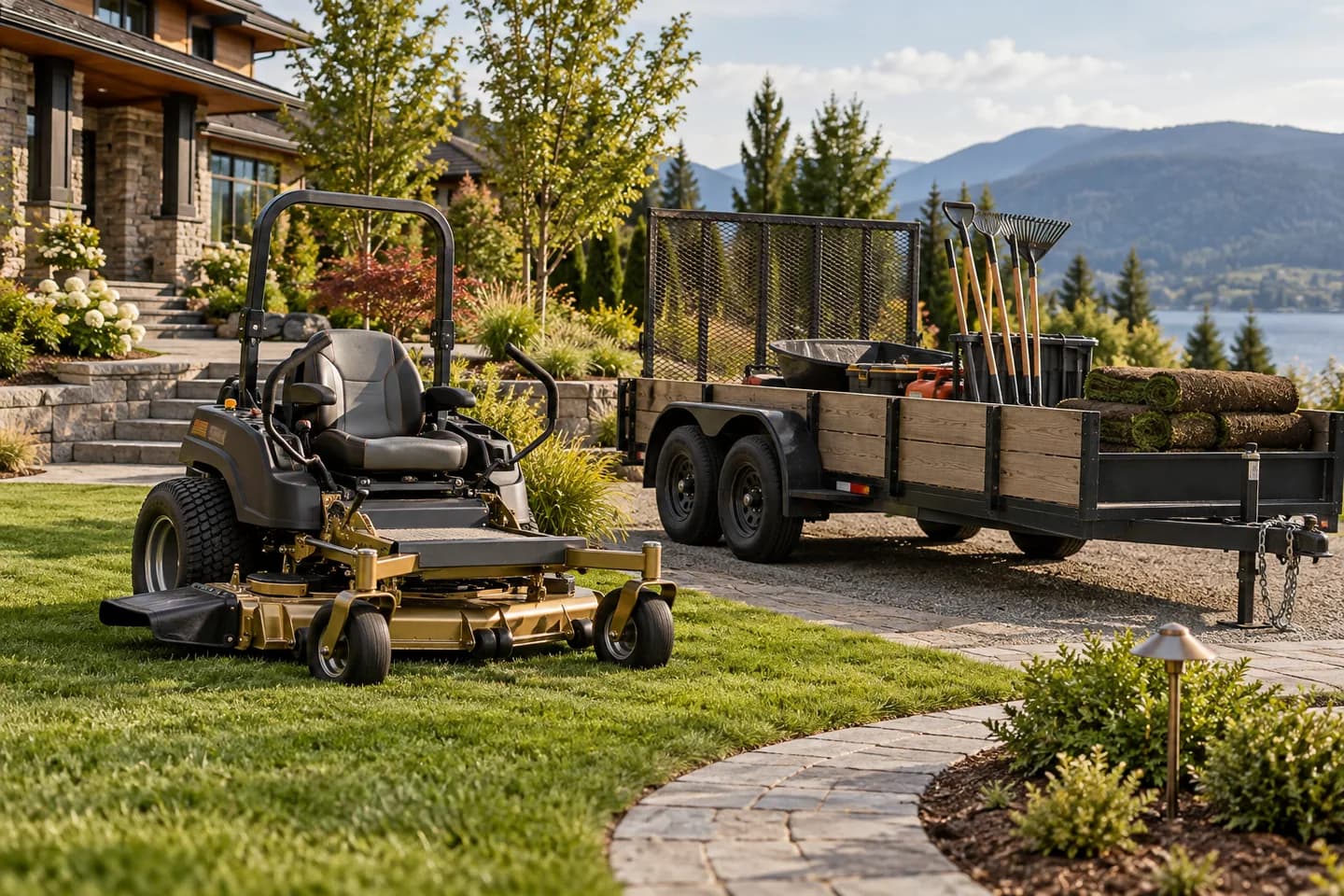
What you are buying: a route that can keep its promises
Buying a landscaping business in Ontario means buying the ability to service particular properties profitably through changing seasons. The trucks and mowers are visible. The harder questions concern which customers will stay, what work their contracts require, and whether the crews, equipment and cash will support those promises after closing.
Start by separating recurring grounds maintenance, landscape construction, snow and ice management, and occasional projects. Each has different staffing needs, margins and exposure. A strong summer maintenance book does not establish that the winter contracts are profitable. Nor does a customer list establish that anyone has committed to another season.
Use the Ontario business purchase checklist as a starting framework, then investigate the operating details below. This is general information; obtain legal, accounting and insurance advice for the particular transaction.
For the broader purchase process and other sectors, visit the business acquisition hub and industry guide directory.
Your acquisition review map
Explore the key checksTest customer routes and contract continuity
Request a customer schedule showing the property, decision maker, service scope, price, renewal date, termination rights, payment history and actual crew hours. Map the routes and compare travel time with productive time. A dispersed book can require another truck and supervisor even when reported revenue looks attractive.
Read the signed agreements, amendments and quotations incorporated into them. Distinguish a multi-year commitment from an annually renewed relationship or an unsigned proposal. Check assignment restrictions in an asset purchase and change-of-control provisions in a share purchase. Some customers may require consent, a new procurement process or confirmation of insurance. Transferability must be established contract by contract.
Identify customers who deal only with the owner. Plan introductions and supervised handovers, with customer consent where needed. Concentration in one property manager can make several separate sites behave like a single account. Put essential customer consents and the seller's transition duties into the purchase letter of intent and definitive agreement.
For comparisons with other contracted service businesses, read the commercial cleaning acquisition guide and the HVAC acquisition guide. Their site-contract and maintenance-obligation discussions can help organize follow-up requests.
Investigate snow liability before accepting winter revenue
Snow removal deserves its own diligence file. Obtain insurance policies and endorsements, insurer loss runs, incident reports, demand letters, customer complaints, deductibles and open claims. Ask about incidents that were reported internally but never submitted to an insurer. Match each historical claim to the contract, service records and responsible subcontractor.
Ontario's Occupiers' Liability Act contains a special written-notice regime for personal injury claims involving snow or ice, including claims against certain snow-removal contractors, with exceptions. The passage of a notice period is not a reliable acquisition strategy for treating past incidents as extinguished. Have counsel and the insurer assess potential exposure and continuing reporting obligations.
Read winter scopes literally. Who monitors weather and refreezing? Does service begin at a snowfall trigger, on dispatch, or through scheduled patrols? Are sidewalks, stairs, loading bays and return visits included? Who authorizes extra salting or hauling? Compare contractual duties with GPS records, photographs, application logs and actual dispatch practices.
For closing, allocate historical claims, defence cooperation, record retention and access to insurance information. Obtain advice on coverage for pre-closing events and post-closing operations. An indemnity from the seller is only useful to the extent it can be enforced and paid.
Reconcile prepaid seasons with the work still owed
A bank balance may include money needed to complete the next several months of service. Prepare a contract-by-contract schedule of deposits, seasonal prepayments, credits, refunds and outstanding obligations. Separate earned receivables from amounts billed for future visits. Confirm whether customer money remains available or has funded the seller's earlier operating expenses.
Winter pricing needs particular attention. Compare fixed-season fees, per-visit charges, snowfall bands, event caps, salt allowances and extra-work approvals. Model the cost of a demanding winter using the target's crew capacity, equipment costs and supplier terms. Check the corresponding downside for a mild winter under event-based pricing. Weather risk should appear in the cash forecast, not just a revenue average.
Agree how the price or working capital calculation treats prepaid contracts and their remaining costs. Avoid crediting the buyer for a liability once and deducting it again elsewhere. List which party handles cancellations, service credits and disputes that straddle closing.
Choose the transaction structure around the actual risks
In an asset purchase, identify the assets and obligations being acquired: equipment, inventory, assignable contracts, business name, telephone numbers, website, scheduling data and agreed prepaid service obligations. Excluded liabilities need careful drafting, but an allocation between buyer and seller does not decide every statutory obligation or third-party right.
In a share purchase, the corporation remains the business operator and its historical exposures remain within it. That may assist some relationships, but it does not override a customer's change-of-control clause, a lender covenant or a regulatory requirement. Examine corporate records, debts, claims and compliance history alongside the operating files.
Use the asset versus share sale comparison tool to frame discussions with advisers. Structure, price allocation, working capital and the strength of seller-backed remedies should be negotiated together. A low headline price can be unattractive if it leaves the buyer financing a prepaid winter and replacing essential equipment.
Prove ownership of the fleet and equipment
Create an equipment register covering trucks, trailers, plows, spreaders, loaders, mowers and attachments. Record serial numbers, vehicle identification numbers, ownership, finance balances, maintenance history, hours and location. Inspect equipment under working conditions where practical. An attachment shown in a yard photograph may be rented, borrowed or owned by the seller personally.
Have counsel conduct appropriate Personal Property Security Act searches and investigate registrations against the relevant owners and collateral. Ontario's personal property registration system records security interests and certain liens; a search result needs interpretation alongside financing documents. Obtain lender payout statements and an enforceable release process for assets sold free of financing. A seller's promise to pay later is a different risk.
Check lease assumptions, transfer fees and lender approvals separately. Budget for corrosion, hydraulic repairs, mower replacement and downtime. Confirm access to maintenance software, keys, telematics and service records, and include a physical delivery inventory at closing.
Match pesticide requirements to the services actually sold
Do not infer pesticide permission from the word landscaping. Obtain a list of products used, application activities, properties served, personnel and any subcontracted treatments. A mowing and pruning operation presents different questions from a business offering pesticide applications.
Ontario's pesticide licensing guidance distinguishes individual exterminator licences from business operator licences and describes exemptions and activity-specific requirements. Unless exempt, commercial application on property the applicator or employer does not own or farm requires an exterminator licence; operating a pesticide extermination business or employing commercial applicators can also require an operator licence. A licence is not blanket permission for every product or use.
Where those activities exist, verify licence categories, current status, personnel, permitted uses, insurance and application records. Confirm with the ministry what the proposed ownership and operating structure requires. Make required approvals and qualified staffing a closing condition; do not assume the seller's permissions pass with the equipment.
Keep crews and subcontractors available
Request employee and subcontractor rosters, written agreements, pay records, accrued entitlements, injury history and the seasonal recall plan. Identify who manages routes, troubleshoots machinery and handles overnight dispatch. The seller's unpaid administrative work and excessive personal hours need a replacement cost in the operating budget.
Review whether people described as independent contractors operate independent businesses in practice. Have advisers assess employment continuity and termination exposure under the chosen structure. A fresh offer letter does not, by itself, resolve all service-related obligations.
Obtain WSIB account information and review subcontractor clearances and insurance. The WSIB clearance guidance explains that construction work has specific clearance obligations before and throughout the work, subject to applicable exemptions. Determine which of the target's activities fall within those rules rather than treating every landscaping task identically.
For subcontracted routes, confirm availability, pricing, equipment capacity, documentation standards and substitution rights. A reliable summer crew may have no capacity during a regional snowstorm.
Inspect the yard, salt storage and premises rights
The operating yard can determine whether the purchased route is workable. Review permitted use, outdoor storage, overnight parking, repair activities, noise restrictions, access hours and space for winter stockpiles. Check the lease term, renewal options, landlord consent and restoration obligations through focused commercial lease negotiations.
Inspect fuel handling, wash areas, drainage, staining, pesticide storage and salt stockpiles. Obtain spill records, environmental reports, notices and correspondence with authorities. A lease assigning cleanup responsibility to the tenant deserves particular attention; transaction wording does not eliminate environmental exposure.
Ontario's snow disposal and de-icing guidance addresses protecting salt stockpiles from precipitation and runoff and controlling leachate. Treat this as a prompt to investigate the actual site, storage design and applicable requirements, rather than assuming one standard approval covers every yard. If the business hauls snow away, verify its disposal arrangements and continuing access to those sites.
A hypothetical winter handover and the closing response
Consider a hypothetical October purchase. The seller describes a commercial route as renewed and includes its annual billing in projected revenue. Diligence reveals that the customer has prepaid, the agreement requires consent to assignment, sidewalk salting is included, and the plow truck is financed. The owner also personally answers every weather call.
The buyer needs more than a customer introduction. Possible closing requirements include written customer consent, a negotiated adjustment for remaining prepaid work, lender payout and releases, confirmation of winter insurance, and a documented dispatch handover. If these cannot be secured, the parties may need to exclude the contract, adjust the price or defer closing. The appropriate response depends on the actual documents and financing.
For the broader transition, deliver route maps, site hazards, access codes through a secure process, service logs, supplier contacts and emergency arrangements. Specify the seller's hours, availability and responsibilities. Review suitable non-compete and non-solicit terms in Ontario with counsel, including their legal limits. Any deferred price or retention mechanism should define the measurement period, customer losses, reporting access and dispute procedure.
Three questions buyers often ask
Can I assume recurring customers will transfer?
No. Review assignment, termination and change-of-control terms, and distinguish a signed commitment from an expectation of renewal. Consent and a credible service handover may both be necessary to preserve the relationship.
Should prepaid snow contracts increase the purchase price?
They may demonstrate customer demand, but prepayments also fund future obligations. Assess the cash transferred, services remaining, expected costs and contract risks together before agreeing on the adjustment.
Does buying assets eliminate old snow claims?
Do not rely on that assumption. Structure affects exposure, but insurance, assumed obligations, statutory rules and the facts of a claim still matter. Investigate historical incidents and arrange appropriate contractual protections and coverage advice.
Build the agreement around the next service season
A useful acquisition agreement connects the price to verified contracts, available crews, usable equipment and a funded service schedule. Resolve the conditions that could prevent performance before committing to the handover date.
Lamba Law provides legal help with buying a business, including structure, diligence, consent and closing terms. Contact Lamba Law to discuss the proposed landscaping acquisition and its seasonal risks.
Primary sources
This guide was checked against the following legislation, regulator guidance, and government materials. Requirements can change after the date shown above.
- Occupiers' Liability Act — Government of Ontario
- Pesticide licences and permits — Ontario Ministry of the Environment, Conservation and Parks
- Personal Property Lien: Help — Government of Ontario
- Questions and answers: Clearances — Workplace Safety and Insurance Board
- Guidelines on Snow Disposal and De-icing Operations in Ontario — Ontario Ministry of the Environment, Conservation and Parks
Lamba Law
Discuss Your Business Purchase
Ask about this topic in a free initial consultation. We’ll carry the guide and relevant service into your request, so you won’t need to start from scratch.
Prepared by Lamba Law
This article provides general legal information, not advice for a particular matter. Legal, tax, valuation, regulatory, and foreign-law questions should be reviewed by the appropriate professional.