Buying an HVAC Business in Ontario
Buying an HVAC business in Ontario? Check TSSA registration, technician credentials, prepaid maintenance, warranties, job margins and financed vans.
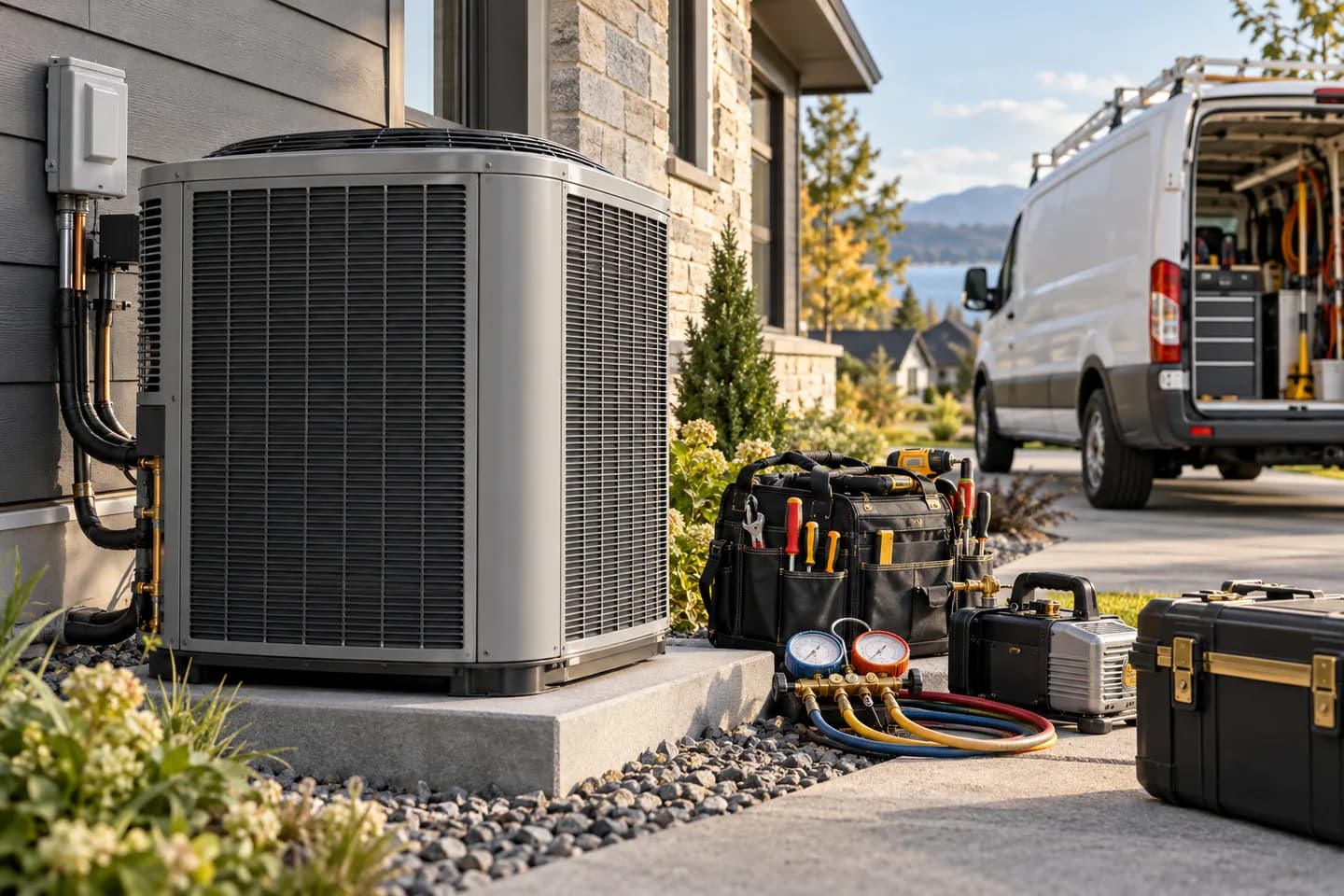
Buy the ability to deliver the work
Buying an HVAC business in Ontario means acquiring a service operation whose value depends on qualified technicians, workable customer commitments and profitable installations. A full booking calendar and a fleet of branded vans do not establish that the buyer can lawfully perform the work or earn the seller’s reported margins.
Before agreeing on price, identify what the company actually does: gas furnace service, heat pump installation, commercial refrigeration, ventilation, new construction or some combination. Each line can require different qualifications, equipment and subcontractor relationships. Separate recurring maintenance revenue from replacement installations, emergency calls and construction projects.
Start with an Ontario business purchase checklist, then build an HVAC schedule covering registrations, technician credentials, unfinished jobs, prepaid plans and warranty exposure. The objective is a business that can keep serving its customers after closing, with the cost of existing promises reflected in the deal. This guide provides general information; obtain legal, accounting and technical advice for the particular transaction.
For the broader purchase process and other sectors, visit the business acquisition hub and industry guide directory.
Your acquisition review map
Explore the key checksSeparate the contractor’s registration from technicians’ certificates
For fuels work, the company’s authorization and the worker’s credentials are separate checks. TSSA registers fuels contractors and certifies individuals who perform regulated work. Its guidance also explains that a business agreeing to do work and subcontracting it can still have registration obligations. Hiring qualified subcontractors does not, by itself, settle the buyer’s own position. See TSSA’s contractor registration and certification guidance.
Request the registration documents showing the exact legal entity and applicable technical fields, together with a roster of technicians and their certificates. Match credentials to the work being sold. Obtain audit reports, unresolved findings, enforcement correspondence and evidence of corrective action. A certificate in a personnel file is insufficient if the technician has left or is unavailable for the required work.
Give TSSA the proposed asset or share structure and confirm what applications, updates or other steps are necessary. Do not assume a registration transfers with the vans, business name or customer list. Make the required authorization a closing condition where necessary, and avoid an interim arrangement that simply borrows the seller’s registration.
Map refrigerant and electrical work to the right qualifications
An Ozone Depletion Prevention card is a refrigerant handling credential, not a complete HVAC trade qualification. Ontario’s refrigerant certification guidance explains that an ODP card alone does not authorize someone to work on or repair refrigeration equipment. Review current cards alongside the qualifications needed for the equipment being serviced. Obtain refrigerant purchase, recovery and service records and inspect recovery equipment and cylinder storage.
For work in compulsory trades, verify each worker’s status and any claimed exemption. Skilled Trades Ontario identifies the recognized qualification or training documents and provides a public register through its compulsory trades guidance. A seller’s description of someone as a senior technician is not verification.
Electrical scope deserves its own review, particularly where heat pump installations involve subcontractors. ESA explains that HVAC exemptions depend on the work and the people’s qualifications; work outside those limits requires an electrical contractor licence. Confirm the boundaries using ESA’s HVAC licensing guidance. Examine who quotes the electrical portion, files required notifications, completes deficiencies and supplies acceptance records. Price any dependence on an outside electrician into the staffing and installation model.
If the company also undertakes plumbing or electrical work, use the plumbing business buying guide and the electrical contracting buying guide to build a separate review for those service lines and their operating credentials.
Rebuild earnings from finished jobs, not sales bookings
Ask for job-level reports that connect signed quotations to equipment orders, technician hours, subcontractor invoices, customer deposits and final collections. Reconcile those reports to the general ledger and bank receipts. A booked installation is not the same as completed, collected and profitable work.
Sample jobs across heating and cooling seasons and across service lines. Include installations that needed return visits, jobs sold at promotional prices and projects requiring extra electrical or duct work. Determine whether reported labour costs include overtime, travel, dispatch time and the owner’s technical work. An owner who installs equipment and manages the schedule without a market salary can make earnings look stronger than the operation will be under a buyer.
For the backlog, request accepted contracts rather than a list of open quotations. Identify cancellation rights, installation promises, equipment availability, permit status, deposits and the estimated cost to finish. Record disputed changes and commercial customer holdbacks separately. Use the interactive due diligence checklist to track missing job files. Agree how work in progress, receivables and deposits enter the closing adjustment so the same value is not counted twice.
Treat prepaid maintenance and warranties as work still owed
Maintenance memberships can support customer retention, but cash already collected may fund visits the buyer must deliver. Obtain a customer-by-customer schedule of active plans, renewal dates, prepaid amounts, visits remaining, included parts, priority service promises, cancellation terms and discounts. Compare the schedule with dispatch records to find overdue visits or commitments missing from the accounts.
Estimate the labour, travel and material cost of fulfilling those plans. The purchase agreement should identify assumed plans and provide an agreed financial treatment for the related obligations. The seller keeping the prepaid cash while the buyer performs every outstanding visit can materially change the economics.
Separate manufacturer parts coverage from the contractor’s own installation and labour warranties. Review callback history, complaints, water damage allegations, unresolved failures and extended warranty contracts. Ask whether registration of equipment warranties was completed and whether reimbursements cover the actual service cost. Allocate responsibility for pre-closing installations expressly, including who answers the customer and who pays. Contractual allocation between buyer and seller does not determine every customer, insurer or statutory claim.
Verify supplier relationships, rebates and installer programmes
A dealership designation or preferred supplier account may be central to the seller’s margins. Obtain the underlying agreements, pricing schedules, credit terms, purchase commitments, territory provisions and termination rights. Ask the supplier directly whether the proposed ownership structure requires consent, a new account or fresh credit support.
Reconcile supplier rebates to the purchases that earned them. Determine whether the rebate belongs to the seller, remains conditional on future volume or could be reduced by returns. Do not treat a discretionary incentive as dependable recurring income without supporting records. Confirm whether demonstration units, displays and specialist tools belong to the company or the supplier.
For customer rebate or financing programmes, inspect the installer’s participation terms, training requirements and responsibility for application errors. Review files where a salesperson promised an incentive before eligibility was confirmed. A customer expecting a rebate can become a collection dispute if installation records or programme requirements are incomplete. Confirm continued participation with each relevant programme administrator rather than relying on the seller’s logo display or past approval.
Check ownership of vans, tools, stock and the operating premises
Build an asset list using vehicle identification numbers and equipment serial numbers. Compare it with financing agreements, leases, supplier statements and personal property security searches. Obtain payout and discharge arrangements for financed vans, recovery machines and other secured assets. A vehicle parked at the shop is not proof the seller owns it free of financing claims.
Inspect service history, vehicle condition, diagnostic instruments and calibration records where relevant. Identify tools owned personally by technicians. Count stock at the shop and in vans, distinguishing usable equipment from damaged units, customer-specific orders, warranty returns and obsolete parts. Establish how special-order equipment and return credits affect the closing price.
The premises also need to fit the operation. Confirm permitted use, storage arrangements, vehicle parking, signage, access and landlord consent requirements. Review refrigerant and fuel storage practices with the appropriate technical adviser. Address assignment or change-of-control provisions through commercial lease negotiations, and secure any necessary consent before committing to occupy the space.
Protect technician capacity and the dispatch knowledge behind it
Map revenue and operational responsibility to actual people. Identify who diagnoses difficult faults, commissions installations, supervises apprentices, estimates commercial work and manages after-hours calls. The departure of one qualified technician can affect both delivery capacity and the range of services available.
Review employment and subcontractor agreements, compensation, vacation balances, overtime practices, benefit commitments and any union arrangements. Have counsel assess employment continuity and potential liabilities under the proposed structure; an asset purchase does not automatically reset every employment obligation. Verify applicable workplace insurance status and review accident history with the insurer and safety adviser.
Plan retention discussions in a way that respects the seller’s confidentiality obligations. Document any agreed offers, transition bonuses and training commitments. If the owner will assist after closing, specify hours, tasks, availability and compensation. Consider appropriately drafted non-compete and non-solicit terms in Ontario with advice on their application. Also identify the dispatcher who knows customer equipment histories and route patterns: replacing technical skills alone may not preserve service quality.
Choose a structure and convert the findings into conditions
In an asset purchase, specify the contracts, equipment, records and obligations the buyer acquires. Customer agreements, supplier accounts and leases may require assignment consent. In a share purchase, the company remains the contracting party, but change-of-control terms and regulatory requirements still need review; its existing liabilities remain within it. Compare the alternatives using the asset versus share sale comparison tool, then obtain transaction-specific advice.
Use the letter of intent to identify the essential dependencies: qualified staff, regulatory confirmation, landlord and supplier consents, acceptable job margins and financing. Guidance on what to include in a purchase letter of intent can help organize those points before drafting the definitive agreement.
Negotiate clear schedules for assumed service plans, warranty work, deposits and unfinished jobs. Consider a holdback or other security for identified exposure, supported by workable notice and payment procedures. If part of the price depends on future results, define the measure, accounting treatment and access to records. A price adjustment cannot replace an authorization or consent needed to operate.
Hypothetical: a strong order book hides a labour shortfall
Suppose a buyer reviews an HVAC company with substantial prepaid maintenance revenue and a busy heat pump installation calendar. The seller presents both as evidence of dependable future earnings. Diligence shows that many plan visits remain outstanding, several installations exclude the electrician’s cost from the job report, and the owner is the only person handling particular commissioning tasks.
The buyer would be paying for customer relationships while also funding work already paid for and replacing the owner’s labour. The response is to rebuild the cost to finish each accepted job, estimate the outstanding maintenance burden and verify who can perform the required technical work after closing.
The parties might adjust the price, transfer an agreed amount for unperformed services, secure electrical subcontractor capacity and document a defined owner transition. If the required staffing or authorization cannot be established, delaying closing may be necessary. This is an illustrative issue, not a reported client transaction; the appropriate response depends on the contracts and findings.
Questions buyers ask about HVAC acquisitions
Can I buy an HVAC company without being a technician?
Ownership and authority to perform regulated work are different questions. Confirm the company’s required registrations and licences, the qualifications of the people doing each service and any supervision requirements. Ownership alone does not authorize technical work.
Does an asset purchase eliminate old warranty claims?
The agreement can allocate warranty responsibility between the parties, but that allocation does not answer every third-party or statutory claim. Identify outstanding promises, insurance coverage and customer-facing arrangements before deciding what the buyer assumes.
Should all maintenance plan revenue increase the purchase price?
No. Separate the value of a renewable customer relationship from cash collected for services still owed. Examine renewal and cancellation patterns, fulfilment costs and the actual contract terms. Agree on consistent treatment of prepaid balances and future work in the purchase price and closing adjustments.
Make the first service day part of the closing plan
Prepare a transition schedule that gives the buyer working access to dispatch software, telephone numbers, domains, equipment histories, warranty records and supplier ordering systems. Address permitted handling of customer and employee information. Verify that emergency calls, scheduled visits and accepted installations have assigned staff and equipment, and that insurance is effective when the buyer takes responsibility.
At closing, update the backlog and maintenance schedules, confirm consents and required authorizations, and reconcile financed asset payouts and customer deposits. Give customers accurate instructions about who will perform outstanding work and receive payments.
Lamba Law provides legal help with buying a business, including acquisition terms, diligence and closing arrangements. To discuss an HVAC acquisition and the obligations attached to its service book, contact Lamba Law.
Primary sources
This guide was checked against the following legislation, regulator guidance, and government materials. Requirements can change after the date shown above.
- Contractor Registration and Certification — Technical Standards and Safety Authority
- Certificate to handle refrigerants — Government of Ontario
- Work in the compulsory trades — Skilled Trades Ontario
- Contractor Licensing/Master Electricians — Electrical Safety Authority
Lamba Law
Discuss Your Business Purchase
Ask about this topic in a free initial consultation. We’ll carry the guide and relevant service into your request, so you won’t need to start from scratch.
Prepared by Lamba Law
This article provides general legal information, not advice for a particular matter. Legal, tax, valuation, regulatory, and foreign-law questions should be reviewed by the appropriate professional.