Buying a Plumbing Business in Ontario
Buying a plumbing business in Ontario? Review trade qualifications, municipal licences, unfinished jobs, holdbacks, warranties and equipment liens.
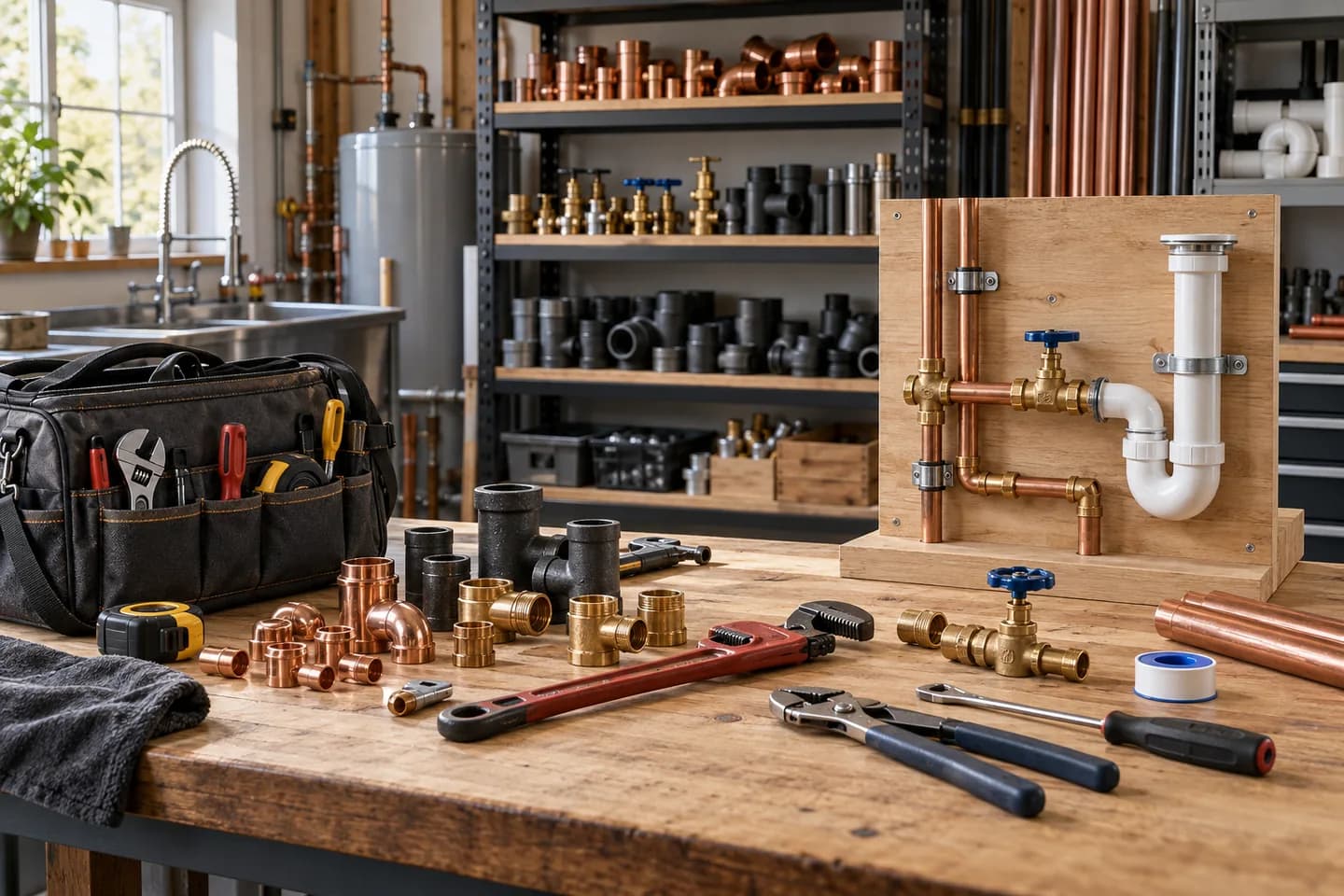
Buy the capacity to finish jobs profitably
Buying a plumbing business in Ontario means acquiring a working service operation: qualified people, dependable dispatch, customer relationships and the ability to complete existing jobs without absorbing unexpected costs. A full schedule is valuable only when those jobs are properly priced, documented and staffed.
Start by separating emergency service calls, renovation work, new construction and recurring commercial maintenance. Each has different payment patterns, supervision needs and warranty exposure. A profitable residential service business may depend on the owner's estimating and customer relationships; a construction subcontractor may carry substantial receivables and holdbacks while continuing to pay workers and suppliers.
Use the Ontario business purchase checklist for the overall transaction, then investigate the plumbing-specific issues below. This is general information; obtain legal, accounting and technical advice for the particular acquisition.
For the broader purchase process and other sectors, visit the business acquisition hub and industry guide directory.
Your acquisition review map
Explore the key checksSeparate business ownership from permission to perform the trade
Owning shares or business assets does not give the buyer a personal qualification to perform plumbing work. The operational question is who will lawfully perform and supervise the work after closing, especially if the seller is the principal working plumber.
Plumber is a compulsory trade in Ontario. Skilled Trades Ontario identifies a Registered Training Agreement, Provisional Certificate of Qualification or Certificate of Qualification as the relevant routes for practising the trade, and explains its public-register and certificate-validity requirements. Verify each worker's actual status rather than accepting a résumé or an old certificate. Investigate any claimed exemption separately. See Skilled Trades Ontario's plumber information.
Request a roster identifying journeypersons, apprentices, subcontractors, certificate information and the work each person handles. For apprentices, review registered training arrangements, training records, sponsor responsibilities and the supervision needed for the planned workforce. Confirm applicable requirements with Skilled Trades Ontario before changing staffing or sponsorship. A seller's undertaking to help occasionally is insufficient if the acquisition depends on their daily technical availability.
Map municipal licences and project permits separately
Municipal contractor requirements vary. There is no sound basis for treating one municipality's plumbing contractor licence as a universal Ontario business licence. Identify every municipality where the company operates and confirm the requirements for the buyer's legal entity, activities and premises.
For example, Toronto requires a Plumbing Contractor licence for businesses contracting for or repairing plumbing installations, or advertising themselves as plumbing contractors. Its application process accommodates sole proprietorships, partnerships and corporations. That company-level requirement is distinct from an individual worker's trade status. Check the City of Toronto's plumbing contractor requirements and obtain transaction-specific instructions about a change of operator or corporate ownership.
Project permits are another separate inquiry. Vaughan's plumbing guidance, for example, addresses permits for additions or alterations to plumbing fixtures and water and sewer services. Build a job-by-job permit register with the issuing authority, applicant, inspection stage, deficiencies and remaining sign-offs. Ask the relevant building department what must happen when responsibility changes. Neither a contractor licence nor a share purchase establishes that every installation has the necessary approvals.
For a contractor with several trades, also review buying an HVAC business and buying an electrical contracting business. Check each service line against the work actually performed rather than relying on the company description.
Choose a structure that fits the contracts and premises
An asset purchase can identify the trucks, tools, inventory, goodwill, contracts and selected obligations the buyer agrees to acquire. A share purchase acquires the corporation, which generally continues to hold its assets and obligations. The choice affects historical exposure, required consents, financing and tax planning; compare the alternatives using the asset versus share sale comparison tool.
In either structure, inspect assignment and change-of-control clauses in maintenance contracts, construction subcontracts, equipment financing, software subscriptions and supplier arrangements. Get necessary consents before relying on those relationships in the valuation. Contractual exclusions of liabilities do not override applicable statutory obligations or bind customers and regulators automatically.
Read the shop lease for permitted use, vehicle parking, outside storage, renewal rights and landlord consent requirements. Confirm that the company can keep its inventory and fleet at the location on workable terms. If the seller owns the building but is retaining it, negotiate the replacement lease alongside the purchase agreement. Our discussion of commercial lease negotiations explains related issues.
Rebuild earnings from completed jobs
Review revenue by service line, customer and job, rather than relying on a single annual sales figure. Reconcile accounting records with dispatch software, invoices, bank deposits and supplier statements. Separate completed work from deposits, unbilled work and amounts customers dispute.
Select jobs across different crews and types of work. Compare the original estimate with actual labour, overtime, materials, subcontracting, equipment rental, disposal and return visits. Include the cost of replacing the owner's estimating, management and field labour. A quoted margin may disappear when travel time and warranty callbacks are included.
For change orders, match each additional charge to the customer's approval, revised scope and invoicing status. Unapproved extras should not receive the same treatment as an accepted invoice. Check whether the estimator consistently prices concealed conditions and whether crew instructions match signed scopes. Also examine customer concentration: recurring work from one property manager may depend on personal relationships, a cancellable arrangement or pricing that has not kept pace with costs.
Price open jobs, deposits and holdbacks together
Prepare a closing schedule for every unfinished project. Record the contract price, approved changes, billings, collections, deposits, unpaid suppliers, work completed, remaining costs and expected completion date. Have an experienced estimator test the cost-to-complete figures, including deficiencies and inspection failures.
Ontario's Construction Act contains statutory holdback requirements where a lien may arise. Its lien, payment and holdback provisions require project-specific analysis; the dates and contract history can matter. Treat holdback receivables as a separate collection category and have counsel confirm the applicable release process, notices and potential claims. See the Ontario Construction Act.
Agree who completes each job, collects each receivable and pays each subcontractor and supplier. Address customer deposits and overbillings as obligations to deliver future work, not simply extra cash. Prevent double counting where work in progress is included in both the purchase price and a working-capital adjustment. Distinguish a negotiated purchase-price escrow from statutory construction holdbacks; they serve different purposes.
Retain the people behind the dispatch board
Identify the qualified plumbers, forepersons, estimator and dispatcher whose departure would reduce capacity. Discuss retention and the proposed operating model through an agreed process with the seller. Assess whether employees are willing to take on emergency rotations, travel or supervisory duties after the owner leaves.
Review employment agreements, service dates, accrued entitlements, benefit arrangements, overtime practices and outstanding complaints. Ask counsel to assess employment continuity and potential successor obligations in the chosen structure. Contractor labels also deserve scrutiny where individuals effectively work as part of the regular crew.
Request safety records, workplace insurance information, training documentation and claims history. If the workforce is unionized, investigate the collective agreement and transaction consequences early. Retention arrangements should reward realistic transition commitments. They cannot substitute for valid qualifications, workable apprentice supervision or enough field staff to complete the purchased backlog.
Check trucks, tools and supplier warranty support
Physically inspect the fleet and major tools. Match vehicle identification numbers and equipment serial numbers to ownership, financing and maintenance records. Include drain cameras, locating equipment, jetters, press tools and attachments; valuable equipment may be leased, rented or owned personally by the seller.
Ontario's personal property registry guidance explains searches by an owner's name and by vehicle identification number. Arrange appropriate PPSA and other lien searches, review the underlying registrations and obtain the required lender releases or payout arrangements. A registration search alone does not establish mechanical condition or resolve every ownership issue. See Ontario's personal property registration guide.
Count warehouse and truck inventory, excluding customer-owned goods and identifying obsolete, damaged or special-order stock. Confirm which supplier credits, rebates and credit facilities will remain available. A supplier's willingness to sell parts is different from agreeing to the buyer's requested credit terms.
For installed products, distinguish the company's workmanship promise from manufacturer coverage. Obtain warranty terms, purchase records, serial numbers, registrations and pending claims. Verify whether manufacturer reimbursement covers labour, travel or only replacement parts, and whether dealer status or claim access requires approval after closing.
Turn diligence findings into closing obligations
The purchase agreement should attach usable schedules for assumed jobs, customer deposits, warranty responsibilities, equipment and excluded liabilities. Include representations suited to the operation, such as disclosure of disputed extras, known defective installations, permit deficiencies, customer claims and equipment financing.
Negotiate specific protection for identified risks: a price adjustment for a loss-making project, an escrow for a disputed receivable, or a completion arrangement for an installation awaiting inspection. Define claims procedures and access to records so that responsibility remains workable after the seller leaves.
Set closing conditions for essential consents, municipal requirements, financing releases and key staff arrangements. The purchase letter of intent guide can help frame these issues before the definitive agreement.
The transition plan should transfer business phone numbers, domain control, dispatch access, supplier contacts, customer files and emergency-call procedures. Arrange insurance continuity with a broker who understands plumbing operations, water-damage exposure and the treatment of work performed before closing.
Hypothetical: a busy backlog with a missing margin
Suppose a buyer agrees in principle to acquire a plumbing contractor because its renovation crews are booked for months. During diligence, the buyer discovers that several jobs include verbal extras, customer deposits have already been spent and the owner is the only person who prices difficult work. One installation also awaits a failed-inspection correction.
The backlog cannot be valued simply by adding the remaining invoice amounts. The buyer needs written confirmation of approved scope, a revised cost-to-complete assessment and a funding plan for materials and payroll. The inspection issue requires a documented correction plan and confirmation of responsibility with the relevant authority.
Possible negotiated responses include excluding a problematic job, reducing the price, requiring a funded completion reserve or making closing conditional on qualified staffing. The appropriate response depends on the evidence and agreements; a seller's optimistic estimate does not settle those questions.
Questions buyers commonly ask
Must I personally be a certified plumber to buy the company?
Business ownership and authorization to practise a compulsory trade are separate questions. Your ownership structure does not qualify you to perform plumbing work. Confirm the municipal business requirements and ensure the operation has people authorized for the work and appropriate apprentice arrangements.
Does buying the assets remove old warranty problems?
An asset agreement can specify which obligations the buyer assumes, but that allocation does not answer every statutory liability question or determine a third party's rights. Review historical installations, insurance and customer promises, then document responsibility for callbacks and claims.
How should unpaid construction invoices affect the price?
Separate ordinary receivables, disputed extras, statutory holdbacks and unbilled work. Assess collectability and remaining performance obligations individually. The agreement should specify who collects the money, funds completion and bears any shortfall, with clear adjustment rules.
Build the agreement around a workable first day
A strong acquisition plan connects qualified staffing, permits, profitable work, clear equipment ownership and enough cash to fulfil customer commitments. Resolve those points before treating the seller's schedule as dependable future earnings.
Lamba Law provides legal help with buying a business, including transaction structure, diligence and purchase agreements. Contact Lamba Law to discuss a proposed plumbing business acquisition and the issues your agreement needs to address.
Primary sources
This guide was checked against the following legislation, regulator guidance, and government materials. Requirements can change after the date shown above.
- Plumber trade information — Skilled Trades Ontario
- Plumbing Contractor licence — City of Toronto
- Plumbing permit requirements — City of Vaughan
- Construction Act, R.S.O. 1990, c. C.30 — Government of Ontario
- Personal Property Security Registration System guide — Government of Ontario
Lamba Law
Discuss Your Business Purchase
Ask about this topic in a free initial consultation. We’ll carry the guide and relevant service into your request, so you won’t need to start from scratch.
Prepared by Lamba Law
This article provides general legal information, not advice for a particular matter. Legal, tax, valuation, regulatory, and foreign-law questions should be reviewed by the appropriate professional.