Buying a Manufacturing Business in Ontario
Buying an Ontario manufacturer? Review customer tooling, unfinished work, quality approvals, environmental risks, machinery and purchase terms.
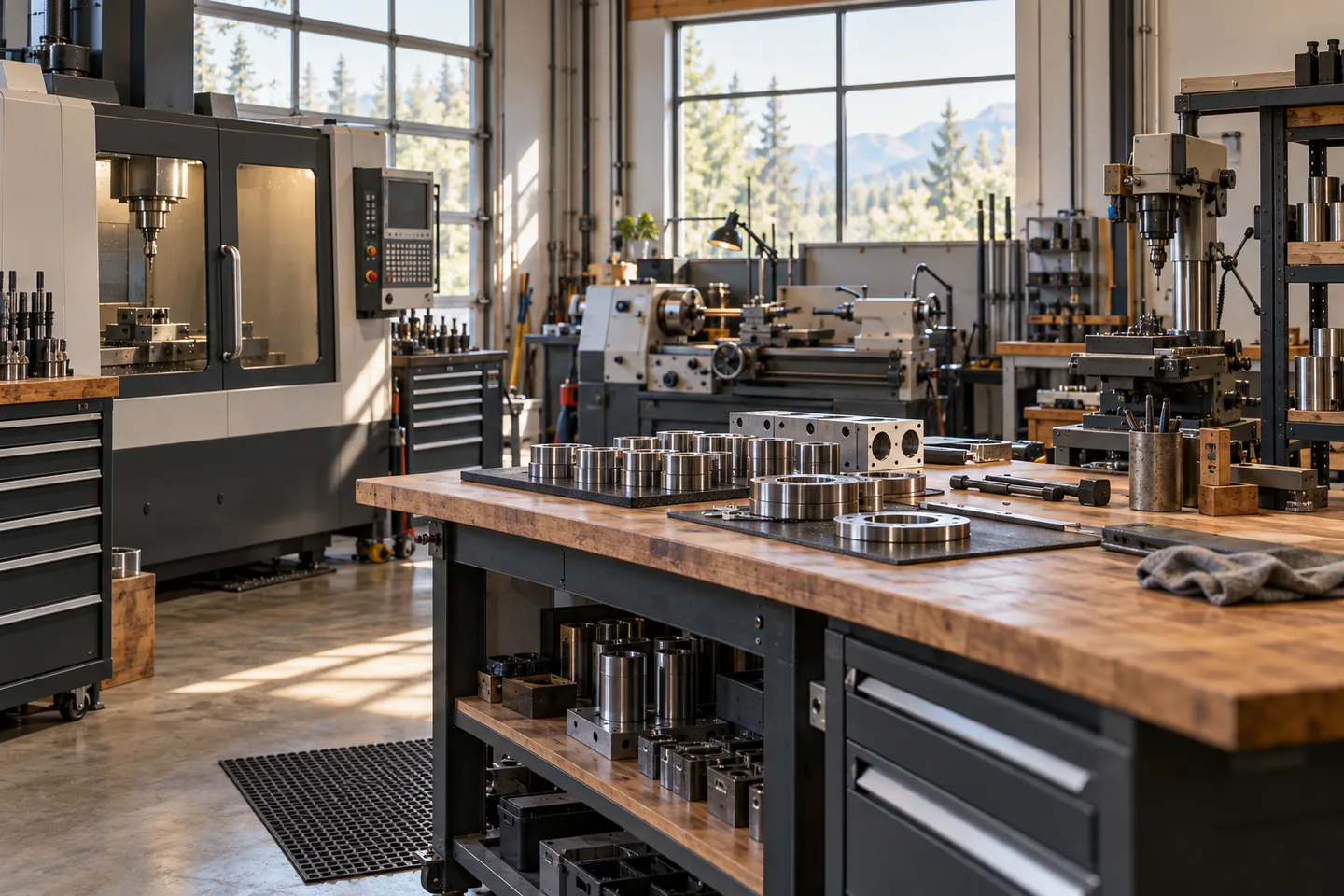
Buy the ability to produce and deliver
Buying a manufacturing business in Ontario means acquiring a working production system: machinery, people, customer approvals, supplier access and the right to use essential tooling. A plant can look busy while its largest orders lose money, its moulds belong to customers and its next equipment upgrade requires substantial compliance work. Those issues should shape the purchase agreement and financing before you commit.
Start by identifying what the business makes, who owns the designs, which processes happen onsite and which customers generate its operating margin. Then test whether the same products can be produced and shipped after closing. Use the Ontario business purchase checklist for the broader transaction framework, alongside the manufacturing questions below.
This guide provides general information; obtain transaction-specific legal, accounting, engineering and environmental advice.
For the broader purchase process and other sectors, visit the business acquisition hub and industry guide directory.
Your acquisition review map
Explore the key checksChoose the structure around operational continuity
In an asset purchase, the buyer acquires specified assets and agrees to assume identified obligations. Customer contracts, the factory lease, equipment leases and software rights may need assignments or replacement arrangements. An asset purchase does not provide universal protection from statutory obligations or environmental exposure.
In a share purchase, the company continues to own its assets and remains responsible for its liabilities. That continuity can help operationally, but change-of-control clauses may still require consent. Historical product claims, tax exposures and regulatory problems remain relevant. The asset versus share sale comparison tool can help frame the initial discussion with your advisers.
Review the factory lease early. Confirm permitted manufacturing uses, renewal options, electrical capacity, loading access, ventilation equipment, outdoor storage and responsibility for restoration when the tenancy ends. A landlord's consent to assignment does not establish that every production activity is permitted. If expansion or a new process drives your acquisition plan, address it in the commercial lease negotiations and verify the necessary municipal and regulatory permissions separately.
Separate customer tooling from assets the seller owns
Customer-owned moulds, dies, jigs, fixtures and gauges often sit beside the manufacturer's own equipment. Their presence in the building does not make them sale assets. Some tools may also be at subcontractors, repair shops or another plant.
Request a tooling register showing each item's owner, identifying number, location, associated customer programme, condition and governing agreement. Reconcile it to physical labels, customer records and the asset schedule. Investigate tools that the manufacturer paid to develop but that a customer later reimbursed: the reimbursement and contract may affect ownership.
For customer-owned tooling, establish the buyer's continuing right to possess and use it, maintenance obligations, insurance arrangements and return requirements. Check whether customer approval is needed when the operator changes or production moves. Identify any disputed invoices or claimed rights to retain tools; do not assume a dispute can be resolved by keeping them.
The purchase documents should exclude third-party property from the purchased assets while arranging a documented custody handover. Also secure the drawings, process instructions and software needed to use the tools lawfully. Owning a machine without access to its necessary programmes can leave production stranded.
Count usable inventory and value unfinished work
A manufacturing inventory balance can contain raw material, work in progress, finished goods, customer-supplied material and scrap. Each category needs its own counting and valuation approach. Book cost alone does not establish what the buyer can recover through production or sale.
Agree how the closing count will treat:
- Material bought for discontinued parts or customers that have stopped ordering.
- Quarantined, rejected, damaged or expired stock and items awaiting customer disposition.
- Customer-owned material and stock held on consignment.
- Scrap, recoverable metal and by-products, including disposal or handling costs.
- Work in progress with incomplete routing records, missing inspections or substantial rework remaining.
For unfinished jobs, reconcile physical completion to labour hours, material issues, remaining outside processing and expected selling price. Determine who receives customer deposits and who bears the cost of completing or correcting the job. Avoid paying twice by including the same work in both an inventory adjustment and another purchase-price component.
Use consistent accounting policies for the working-capital target and closing calculation. Specify reserves for obsolete stock, the treatment of overhead and a process for disputed counts. The point is to fund inventory that can support profitable deliveries.
If the transaction includes delivery or direct online sales, extend the review with the trucking business purchase guide and the ecommerce business purchase guide. They address transport operations and storefront fulfilment as distinct business activities.
Test purchase orders against actual customer commitments
A forecast, blanket purchase order and firm release may create very different commitments. Ask for the underlying supply agreement and incorporated customer terms, rather than treating the order book as guaranteed revenue.
Review cancellation rights, minimum quantities, delivery penalties, warranty obligations, customer set-off rights and termination provisions. Compare quoted prices against current steel, resin, energy, freight and labour costs. A busy plant supplying fixed-price orders may need cash simply to fulfil its backlog.
Where the seller says prices can rise with material costs, obtain the actual escalation formula, notice requirements and examples of increases the customer accepted. Confirm whether the contract permits an increase or merely allows the supplier to request one. Examine long payment terms and customer deductions alongside reported sales.
Map critical customer and supplier consents into the transaction timetable. The discussion of what to include in a purchase letter of intent is useful when customer concentration, consent requirements or a deteriorating backlog should affect the conditions and proposed price.
Check quality approvals, defects and recall exposure
Request current quality certificates, their precise scope, audit reports, unresolved findings, calibration records and customer approvals. An ISO certificate, customer supplier code and approval for a particular part or process are separate matters. Ask the certification body and affected customers what the proposed ownership, entity or location change requires; do not assume approvals continue automatically.
Review rejection rates, returned goods, warranty credits, containment costs and customer corrective-action requests. Trace a sample production lot from incoming material through inspection to shipment. Missing traceability can make a targeted correction much harder.
For products within the Canada Consumer Product Safety Act's scope, manufacturing, importing or selling can carry mandatory incident-reporting duties. Health Canada's industry reporting guidance explains that manufacturers and importers must also provide further incident and proposed corrective-measure information. Other product categories may have different regulatory regimes.
Obtain complaint files, recall history, insurer loss runs and relevant customer indemnities. With an insurance adviser, assess product liability, recall expense, policy exclusions and coverage for products made before closing. Contractual responsibility between buyer and seller does not itself determine the rights of an injured person or regulator.
Match environmental permissions to the actual plant
Compare the production floor with the permissions file: coating lines, dust collectors, furnaces, solvent use, wastewater systems and waste activities can raise different requirements. Obtain approvals, registrations, supporting technical reports, monitoring records, inspection correspondence and outstanding orders.
Ontario explains that an Environmental Compliance Approval may be needed before constructing, operating or upgrading certain facilities, while eligible activities may instead require Environmental Activity and Sector Registry registration. Its Environmental Compliance Approval guidance also addresses changes and amendments. Have an environmental consultant confirm the route for this facility and the proposed buyer; an old approval is not proof that later production changes were covered.
Investigate spills, historical chemical storage, waste disposal practices and potential soil or groundwater concerns. Review landlord correspondence and any environmental indemnities. Even if real estate is excluded, operating at the site can create material exposure. Set out responsibility for investigations and remediation, but recognise that contractual allocation does not bind regulators. Budget for compliance work, approval dependencies and downtime before relying on expansion revenue.
Inspect machinery, guarding and financing together
Commission a technical assessment of critical equipment under normal operating conditions. Review maintenance logs, breakdown history, controls, spare-parts availability and the cost of moving or replacing bottleneck machines. A purchase appraisal should distinguish equipment value from the investment needed to keep production reliable.
Safety needs its own review. Ontario's Industrial Establishments Regulation contains machine-guarding requirements and requires pre-start health and safety reviews in specified circumstances involving new or modified equipment, protective elements, structures or processes, subject to applicable exemptions. Have a qualified specialist assess existing deficiencies and planned upgrades; a sale alone does not mean every machine requires a new review.
Request guarding assessments, relevant pre-start reports, lockout procedures, training records and Ministry inspection orders. Price necessary upgrades and production interruptions.
Separately, reconcile equipment serial numbers to invoices, leases and financing documents. Conduct appropriate security searches and arrange lender payouts, releases or approved assumptions. A seller's asset list is insufficient evidence that a CNC machine can be transferred free of financing claims.
Retain the people who keep the line running
Identify the employees who know machine setups, programmes, maintenance shortcuts, inspection methods and customer requirements. Assess whether those skills are documented and shared across shifts. A transition plan centred only on the departing owner can miss the toolmaker or quality manager essential to deliveries.
Review employment terms, service history, accrued entitlements, benefit plans, workplace injury records and outstanding claims with employment counsel. Decide how offers, communications and retention arrangements will fit the transaction structure.
For a unionised operation, obtain collective agreements, bargaining-unit descriptions, grievances, arbitration awards and bargaining correspondence. Ontario's Labour Relations Act, 1995 provides successor-employer rules where a sale of business falls within the legislation. Collective agreements and bargaining rights can continue; buying assets does not automatically remove them. The result depends on the operation and transaction, and Board determinations may matter.
Have labour counsel assess the specific succession position, including any proposed integration into another facility. Quantify wage commitments, scheduling constraints, benefit obligations and unresolved disputes before committing to a staffing or savings forecast.
Turn the findings into price terms and closing conditions
Consider this hypothetical: a buyer plans to acquire an injection-moulding operation based on its backlog. Diligence reveals that its largest customer owns the moulds, several releases can be cancelled, and a new resin price has erased the margin on existing orders. A planned replacement press also needs safety and environmental assessment.
The response could include written customer confirmation of continued tooling use, revised pricing, an inventory reserve and a condition addressing the replacement project's feasibility. Simply obtaining a general seller warranty would leave the buyer funding unresolved operational risks.
More broadly, tie material findings to specific contractual protections: completion obligations for unfinished jobs, identified liability allocations, targeted indemnities, holdbacks where appropriate and clear adjustment procedures. Consider the seller's ability to meet indemnity obligations. Use the interactive due diligence checklist to track evidence and responsibility for each closing item.
Before funds move, confirm consents, financing releases, insurance and plant access. Arrange delivery of production programmes, inspection records, supplier contacts and system administrator access. Set a transition schedule that covers purchasing, payroll, customer communications and the first production runs.
Three questions manufacturing buyers often ask
Can I include all the tooling in the purchase price?
Only after establishing ownership. Customer-owned or leased tooling should be distinguished from assets the seller can sell. The buyer may instead need continuing custody and use arrangements, with customer consent where required.
Will quality certifications remain valid after closing?
Check the requirements of the particular certification body and customer. Entity changes, ownership changes, process changes and relocation can have different consequences. Make essential continuity confirmations a closing priority.
Does an asset purchase avoid old product and environmental problems?
It can allocate assumed obligations between the parties, but it does not guarantee immunity from statutory duties, third-party claims or the consequences of operating at a contaminated site. Investigate the specific exposure and coordinate contractual protections, insurance and specialist advice.
Build a purchase agreement around the production reality
The strongest manufacturing diligence connects legal rights to the work happening on the floor. Establish which assets belong to the seller, which customers will continue, what inventory is usable and what spending is needed to operate safely and lawfully.
Lamba Law provides legal help with buying a business, including transaction structure, contract review, consents and purchase-agreement protections. Contact Lamba Law to discuss an Ontario manufacturing acquisition and the issues that should be resolved before closing.
Primary sources
This guide was checked against the following legislation, regulator guidance, and government materials. Requirements can change after the date shown above.
- Industrial Establishments, R.R.O. 1990, Regulation 851 — Ontario e-Laws
- Environmental Compliance Approval — Ontario Ministry of the Environment, Conservation and Parks
- Labour Relations Act, 1995 — Ontario e-Laws
- Report an incident involving a consumer product or cosmetic: Industry — Health Canada
Lamba Law
Discuss Your Business Purchase
Ask about this topic in a free initial consultation. We’ll carry the guide and relevant service into your request, so you won’t need to start from scratch.
Prepared by Lamba Law
This article provides general legal information, not advice for a particular matter. Legal, tax, valuation, regulatory, and foreign-law questions should be reviewed by the appropriate professional.