Buying an Auto Body Shop in Ontario: Legal and Due Diligence Guide
Buying an Ontario auto body shop? Check insurer approvals, paint booths, unfinished repairs, technician qualifications, equipment and closing risks.
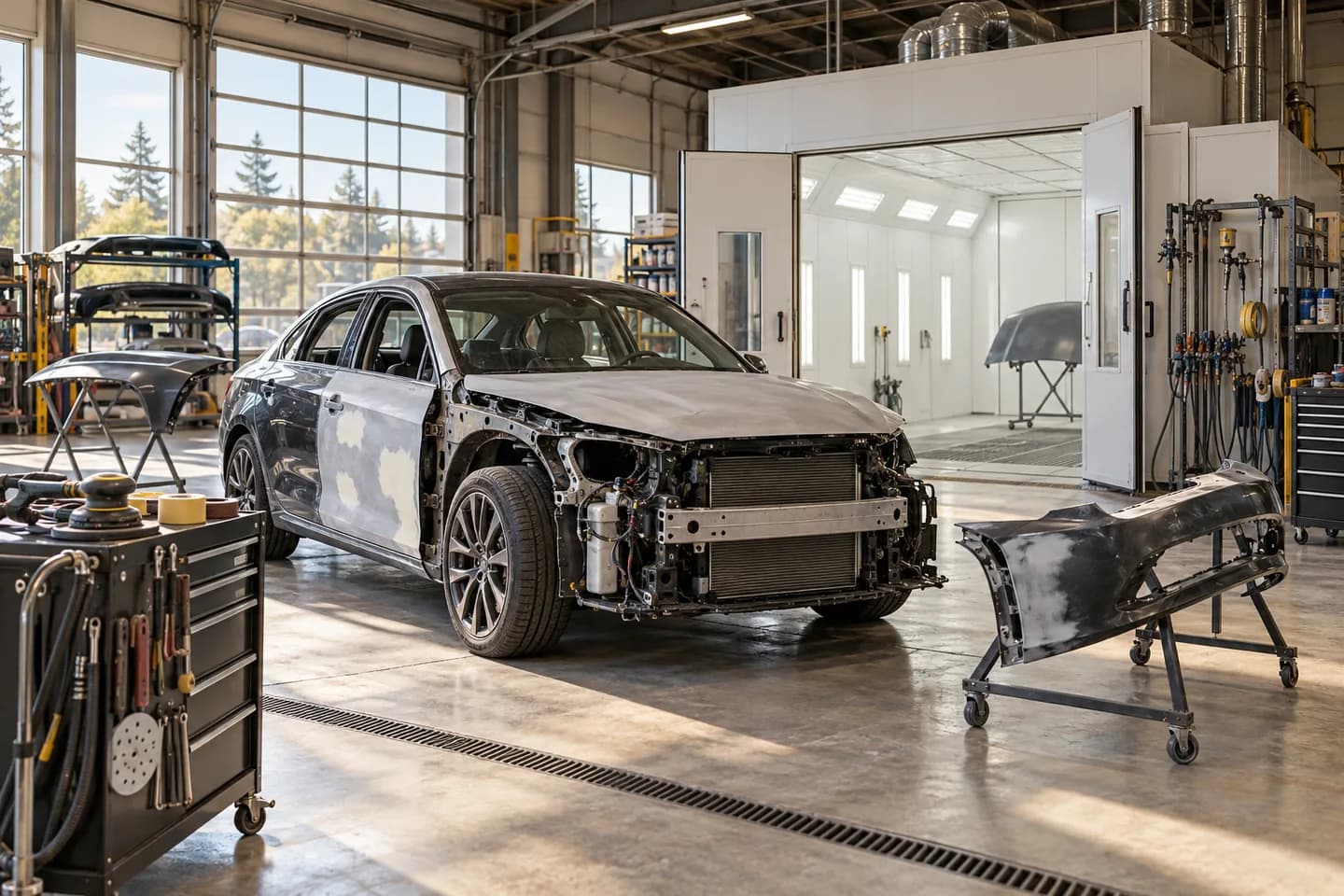
Verify Collision Operations Can Continue After Closing
Buying an auto body shop in Ontario requires proof that the repair business can keep operating after closing. Paint booths, frame equipment and an attractive backlog are only part of the value. Insurer relationships, manufacturer repair programmes, qualified technicians, environmental compliance and unfinished customer jobs can determine whether the expected revenue survives the ownership change.
Start by identifying what the seller actually owns and controls. Some equipment may be financed, estimating software may belong to a subscriber account, and the vehicles filling the yard normally belong to customers. A crowded property is not an inventory of assets available for purchase.
This guide focuses on collision and refinishing businesses. Use it with the broader Ontario business purchase checklist, then build a diligence request around the particular shop. The article provides general information; obtain transaction-specific legal, accounting, environmental and technical advice before committing to a purchase.
For the broader purchase process and other sectors, visit the business acquisition hub and industry guide directory.
Your acquisition review map
Explore the key checksStructure the Deal Around the Consents You Need
In an asset purchase, the agreement identifies equipment, inventory, goodwill, contracts and obligations the buyer will acquire. In a share purchase, the corporation continues to hold its assets and liabilities while its owners change. Neither structure automatically resolves customer consents, regulatory requirements or restrictions in commercial agreements.
Prepare a consent schedule before agreeing to a firm closing date. Include the landlord, equipment financiers, insurer repair programmes, vehicle manufacturers, paint suppliers, estimating platforms and any collision franchise. Check assignment and change-of-control provisions separately: keeping the same corporate name does not answer every contract question.
A useful purchase letter of intent makes satisfactory diligence, financing, lease arrangements and essential third-party approvals conditions of proceeding. It should also identify who pays for required upgrades and what happens if an important repair programme declines to continue. Compare the structures with the asset versus share sale tool, then ask your advisers to model the actual deal.
Test Insurer and Manufacturer Relationships Before Valuing Them
An insurer referral arrangement and an OEM repair certification are different things. One may influence where collision work originates; the other may require particular training, tools, equipment or facility standards. Obtain each agreement and current approval letter rather than accepting a list of logos on the seller's website.
For each significant relationship, ask:
- Which legal entity participates, and which premises and technicians are covered?
- Does an asset transfer or ownership change require notice, consent, a fresh application or an inspection?
- Are upgrades, training or outstanding corrective actions necessary to remain eligible?
- What termination rights, audit rights, pricing terms and performance measures apply?
- How much completed, collected revenue came from that relationship during the periods being valued?
Seek written confirmation from the programme counterparty about the proposed transaction. Do not assume the seller can transfer participation merely by including it in the asset schedule. If eligibility is uncertain, address it through a closing condition, revised valuation or carefully defined deferred consideration. Avoid paying a guaranteed price for referral income that depends on an unconfirmed approval.
Reconcile Every Unfinished Collision Job
Work in progress needs a vehicle-level schedule, not one balance-sheet number. Record the customer, VIN, insurer or payer, authorized scope, approved supplements, parts ordered, labour completed, customer deductible, deposits, expected completion date and remaining cost. Distinguish a proposed supplement from approved additional revenue.
Review a sample of files from authorization through delivery and collection. Ontario's guide for auto repair businesses explains consumer-facing requirements involving estimates, authorization, invoices and warranties. Check that the shop's forms and records meet the applicable rules; insurer involvement does not replace the need to establish the customer's instructions.
The purchase agreement should allocate pre-closing work, collection rights, unpaid parts, refunds, customer complaints and comeback repairs. Specify who communicates changes to customers and obtains any necessary consent to complete or transfer work.
A seller's internal estimate of completion can overstate profit if hidden damage, backordered parts or rework remains. Have a collision specialist examine material open jobs, and agree a closing adjustment method that prevents the buyer paying twice for the same parts, labour or receivable.
Inspect Paint Booths and Environmental Records Together
A recently painted building is not evidence that a refinishing operation has the correct environmental permissions. Ask an environmental adviser to identify the applicable approval or registration route and compare the documents with actual equipment and operating practices.
Ontario's automotive refinishing regulation sets an EASR framework for qualifying facilities, with operating and recordkeeping requirements. It does not establish that every body shop qualifies for that route. Confirm how the particular shop's booth configuration, exhaust arrangements, activities and location fit the rules, and what the buyer must do when the operator changes.
Request booth specifications, filter and maintenance records, coating-use records, complaint files, inspection correspondence and documents for modifications. Investigate paint mixing areas, solvent storage, waste collection, drains and any former underground tanks. A consultant should scope the investigation rather than treating a clean-looking floor as sufficient diligence.
Allocate known remediation, required upgrades and historical claims expressly. An indemnity gives contractual recourse against the seller; it does not prevent a regulator or third party from asserting rights against a person who is legally responsible. Consider the seller's ability to honour that indemnity after closing.
Check the Premises, Equipment and Calibration Capability
Collision work depends on a property that permits the activities being purchased. Review permitted use, zoning, spray operations, outdoor vehicle storage, parking, signage, access, renewal options and responsibility for roof penetrations or exhaust systems. Coordinate environmental review with the commercial lease negotiation, particularly where expensive equipment cannot be moved economically.
Create a serial-numbered equipment schedule. Separate owned, leased, financed and supplier-provided assets. Search security interests through counsel and obtain appropriate payout and release arrangements. Ask for service histories and independent inspections of lifts, frame systems, welders, compressors and diagnostic equipment.
For vehicles with advanced driver-assistance systems, establish how the shop identifies necessary scans, calibration and verification work. Review documented procedures, qualified personnel and subcontractor arrangements. If calibration is outsourced, confirm capacity, pricing, insurance, reporting and how those costs are reflected in estimates.
Confirm that software subscriptions, repair information access and estimating integrations will be available to the buyer under their actual terms. Obtain the required accounts and permissions through the providers; a handover of somebody else's password is not a reliable technology transition.
Where the site includes mechanical work or washing facilities, also review the auto repair shop purchase guide and the car wash purchase guide. Use those guides to organize the additional equipment, customer-work and site questions.
Retain the People Who Make the Shop Viable
The seller may be the principal estimator, production manager or relationship holder for several insurer accounts. List those responsibilities and determine who performs them after closing. A short consulting promise is inadequate if the business needs a replacement estimator, recruiting time and a longer introduction period.
Skilled Trades Ontario identifies Auto Body and Collision Damage Repairer as a compulsory trade. Verify the status and permitted work of the individuals doing relevant work, including apprentices and their supervision arrangements. Do not confuse a company's marketing certification with an individual's legal qualification.
Review compensation, accrued entitlements, benefits, overtime practices, employment agreements, workplace incidents and any union arrangements with employment counsel. An asset purchase does not automatically reset all employment-related obligations. Plan offers and communications before the seller makes promises to staff.
Discuss retention with the essential people through an agreed process. Protect confidential employee information during diligence, and ensure transition incentives are documented rather than left as informal assurances.
Price Collected Earnings and Real Liabilities
Reconcile repair-management reports to financial statements, bank receipts, insurer remittances and tax records. Separate invoiced sales, approved repairs, cash received and amounts disputed. Review customer and insurer concentration, parts margins, paint-material costs, subcontracting, overtime and warranty rework. Normalized profit should include a realistic cost to replace the owner's operational role.
Inspect stock for returnability, damaged items, model-specific parts, obsolete paint materials and supplier ownership. Define the inventory count and valuation method, including treatment of credits for returned parts. Review paint supply agreements for equipment support, minimum purchases, rebates and repayment obligations triggered by termination.
Identify deposits, deductibles already received, parts invoices, equipment finance, tax exposure and potential insurance deductibles. Define working capital precisely in a share deal or any asset transaction using an adjustment mechanism. The definition must fit the shop's accounting practices.
Where the seller will finance part of the price, use a seller financing calculator to explore cash-flow scenarios, then have counsel document security, payment terms and any negotiated rights concerning claims. A model does not prove that the repair backlog will generate the cash needed to pay the note.
Plan Custody of Customer Vehicles and Disputed Files
Prepare a physical yard and bay register immediately before closing. Identify every customer vehicle, its location, keys, condition, authorized work, payer and outstanding dispute. Agree who is responsible for custody and insurance during the handover and who may authorize release. Customer vehicles should not be described as the shop's saleable stock.
Ontario's Repair and Storage Liens Act governs relevant lien rights and procedures. Have counsel assess disputed files and any proposed transfer of receivables or lien rights. The presence of a vehicle on the property does not establish ownership, a valid lien or an unrestricted right to sell it.
Hypothetical issue: the seller includes several completed but unpaid repairs in the purchase price. After signing, the buyer discovers that two customers dispute authorization, while an insurer has approved only part of another invoice. Instead of treating the whole balance as collectible, the parties could exclude disputed receivables, require resolution before closing or negotiate a defined collection-based adjustment. They must also settle custody and communication responsibilities so customers are not trapped between the parties.
Questions Buyers Commonly Ask
Will insurer and OEM approvals continue after I buy the shop?
Check the actual agreements and obtain the relevant counterparty's written requirements. An asset sale, share sale, premises change or departure of a qualified person may raise different issues. Make essential approvals a condition where appropriate rather than relying on the seller's expectation.
Can I leave all old repair problems with the seller?
The contract can allocate claims and provide remedies between the parties, but it cannot remove consumer rights or statutory responsibilities. Define comeback handling, customer communications, insurance and funding for known issues. In a share purchase, historical obligations remain within the acquired corporation.
Should I buy the building as well?
Assess the property separately, including title, financing, environmental conditions, permitted use and capital work. Property ownership can support continuity but also increases the capital and investigation required. A viable long-term lease may suit some buyers; neither approach substitutes for site-specific diligence.
Make Closing an Operational Handover
Use a closing checklist that covers landlord and programme consents, equipment releases, required environmental steps, employee arrangements, insurance, software access and the agreed work-in-progress adjustment. Document what must exist before funds move and what will be completed afterwards, with an owner and deadline for each item.
At handover, reconcile keys, vehicles, unfinished files, parts, deposits and customer commitments. Establish a controlled process for access to business records and systems, and arrange introductions to insurer contacts, suppliers and calibration providers where permitted. Agree how seller assistance and unresolved customer issues will be recorded and escalated.
Lamba Law's business acquisition legal services can help turn these findings into consent conditions, purchase-agreement terms and a workable closing process. Bring the equipment schedule, lease, material programme agreements and open-job report to the first discussion so the legal work follows the business's actual risks.
Primary sources
This guide was checked against the following legislation, regulator guidance, and government materials. Requirements can change after the date shown above.
- A guide for auto repair businesses — Government of Ontario
- O. Reg. 347/12: Registrations under Part II.2 of the Act — Automotive Refinishing — Ontario e-Laws
- Auto Body and Collision Damage Repairer — Skilled Trades Ontario
- Repair and Storage Liens Act, R.S.O. 1990, c. R.25 — Ontario e-Laws
Lamba Law
Discuss Your Business Purchase
Ask about this topic in a free initial consultation. We’ll carry the guide and relevant service into your request, so you won’t need to start from scratch.
Prepared by Lamba Law
This article provides general legal information, not advice for a particular matter. Legal, tax, valuation, regulatory, and foreign-law questions should be reviewed by the appropriate professional.