Buying a Tire Shop in Ontario: Inventory, Storage and Deal Risks
Buying an Ontario tire shop? Check seasonal revenue, customer tire storage, ageing inventory, RPRA obligations, fleet accounts, leases and closing terms.
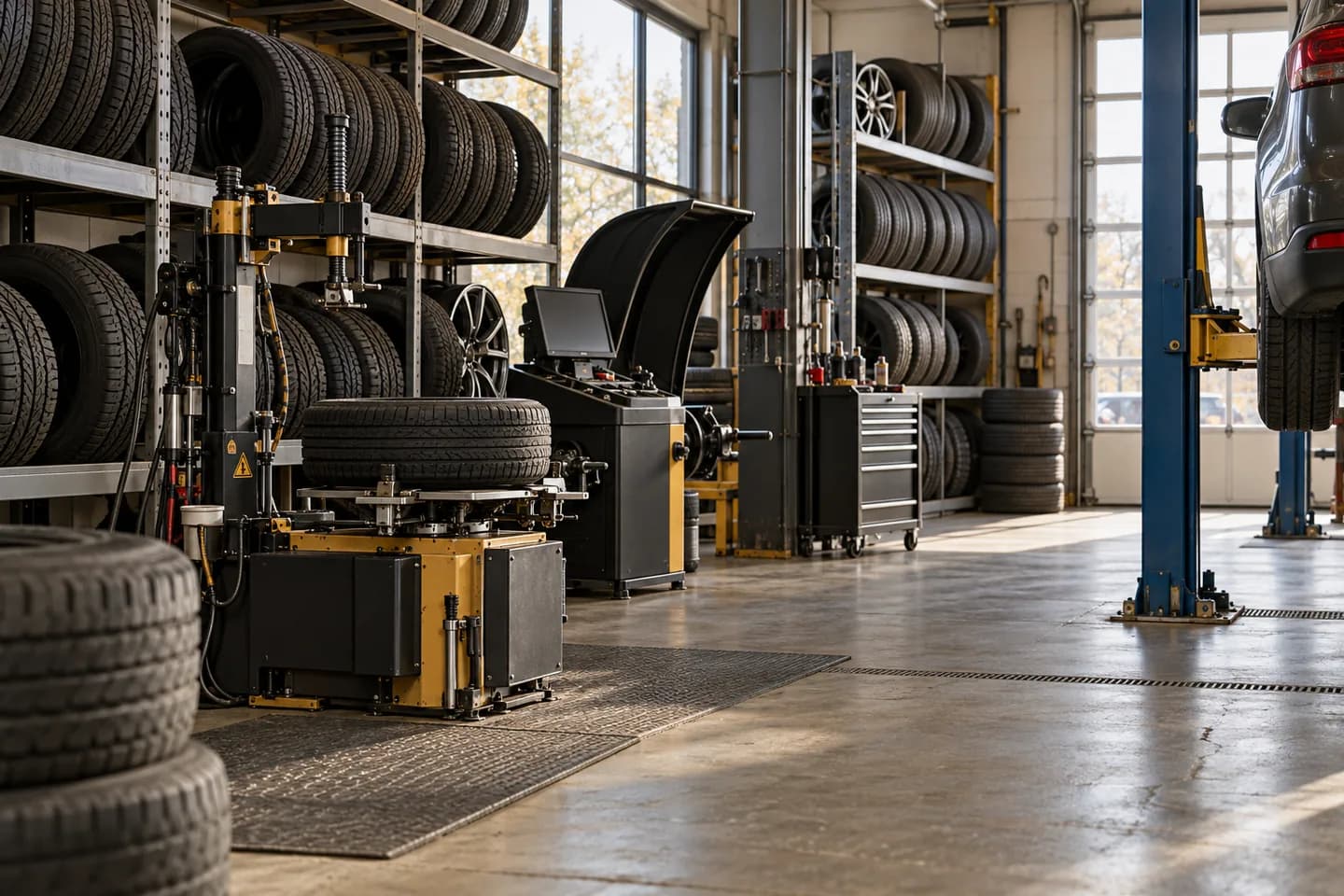
Buy the Earnings and Obligations Behind the Tire Racks
Buying a tire shop in Ontario means acquiring a seasonal retail and service operation, often with a separate customer-storage business. The right due diligence tests whether earnings survive a change of owner, whether sale inventory is usable, and whether prepaid storage and service commitments are funded at closing. The number of tires on the premises is an unreliable starting point: many may belong to customers.
Separate revenue into new tires, used tires, installation and balancing, repairs, storage, wheels and commercial accounts. Each stream has different margins, staffing demands and obligations. Ask the seller to explain which customers come for a brand, which come for the location, and which come because the owner answers the phone personally.
Our Ontario business-purchase checklist covers the general acquisition process. This guide adds the tire-specific questions that should shape the offer, inventory count and transition plan. It is general information; obtain transaction-specific legal, accounting and technical advice before committing to a purchase.
For the broader purchase process and other sectors, visit the business acquisition hub and industry guide directory.
Your acquisition review map
Explore the key checksReconstruct Seasonal Cash Flow Before Naming a Price
Annual profit can hide a difficult cash cycle. Review monthly sales, gross margin, labour costs and purchases over several comparable periods. Compare spring and autumn changeover peaks with the quieter months, and distinguish unusual weather-driven demand from a repeatable customer base. A business that looks profitable annually may need significant inventory financing before its busiest season.
Reconcile point-of-sale reports to bank deposits, merchant statements, supplier purchases and tax records with the accountant. Investigate unusually large manual discounts, cash adjustments, returns and credits. Separate storage charges collected in advance from work already completed. A future booking is neither completed revenue nor a guaranteed customer.
For commercial fleets, examine revenue and margin by account, payment history, outstanding disputes and how pricing is renewed. Obtain the actual agreements rather than relying on the seller's account list. Identify assignment and ownership-change clauses, service response commitments, credit limits and whether the customer can leave without cause. A large fleet account deserves its own transition condition when losing it would change the economics materially.
Define an Inventory Count That Excludes Customer Property
Create separate schedules for saleable stock, customer-owned stored tires, consignment goods, returns, warranty items and scrap awaiting collection. Only the assets the seller owns and has agreed to sell belong in the purchased inventory calculation. Ask how each category is marked in the software and physically segregated.
Count by brand, model, size, load and speed rating, condition and manufacturing date. Inspect actual tires rather than accepting a single inventory-value report. Transport Canada's Riding on Air guide explains tire identification and date markings. Manufacturing dates are useful diligence information; they do not establish one universal legal expiry date for every tire. Obtain qualified advice on condition, storage history and manufacturer guidance.
Agree how discontinued sizes, damaged stock, incomplete sets, recalled items and slow-moving products will be priced or excluded. Specify who conducts the closing count, who resolves disputes and how supplier credits or rebates affect cost. Test return rights with the supplier. The seller's statement that old stock can be returned is worth little without evidence of the terms and the buyer's eligibility.
If the shop also offers mechanical or collision work, use the guides to buying an auto repair shop and buying an auto body shop to extend the review beyond tire inventory and storage.
Treat the Tire Hotel as a Custody and Deferred-Service Business
A storage customer creates both a recurring relationship and a responsibility for property. Match a sample of customer records against the racks: customer identity, contact details, tire description, wheel identification, storage location, photographs and collection history. Check whether the shop can reliably return the correct set during a busy changeover weekend.
Review storage agreements, prepaid periods, cancellation and pickup terms, missing-property complaints and insurer correspondence. Identify who owns the racks and whether overflow storage is off-site under a separate lease or informal arrangement. Confirm insurance for customer property and the actual storage locations with the broker.
The closing agreement should identify the records and custody arrangements being transferred, customer communications, amounts collected for future storage and the handling of past losses. A price adjustment or funded reserve may be appropriate where the buyer takes over service that the seller has already been paid to provide. Uncollected or apparently abandoned tires require a documented process; a buyer should not simply treat them as free sale inventory.
Identify the Shop's RPRA Role From Its Supply Chain
Do not assume every tire retailer has identical recycling obligations. RPRA's tire producer guidance identifies responsibility using factors including brand ownership, importing and direct supply. A shop importing tires itself may have a different compliance position from a shop buying all stock from established Ontario distributors. Trace invoices, brands and import arrangements before deciding which role applies.
RPRA also distinguishes producer obligations from collection-site participation. Its tires program FAQs describe arrangements with producers or producer responsibility organizations for collecting used tires. Check the shop's role and current requirements separately from its supply obligations. Obtain collection agreements, pickup records, outstanding complaints and confirmation of how the buyer will participate after closing.
Ask the seller to explain reporting responsibilities and any arrangements with a producer responsibility organization. Check accumulated scrap and whether the collection contractor accepts each tire category at the site. Avoid building the offer around a historical fee, exemption or collection threshold without checking current guidance. The practical closing question is whether the buyer has a lawful, workable supply and scrap-removal arrangement from its first day of operation.
Inspect the Premises, Equipment and Supplier Arrangements
The premises must accommodate sales, fitting, vehicle movement, storage and scrap handling. Review the permitted lease use, remaining term, renewal options, assignment provisions, rent adjustments and responsibility for repairs. Check loading access, parking rights, exterior storage and any separate warehouse arrangement. Resolve the key points through commercial lease negotiations before an unconditional purchase commitment.
Have appropriate technicians inspect lifts, compressors, mounting and balancing machines, alignment equipment and torque tools. Request maintenance records, downtime history, calibration information where relevant and evidence of ownership. A machine appearing on the asset list may be financed, leased or provided under supplier terms. Searches and lender discharge arrangements should match actual asset identifiers.
Review distributor accounts, credit facilities, rebates, brand permissions and software subscriptions. Confirm whether the buyer qualifies for the same terms. A rebate tied to annual purchase volumes may not survive a midyear ownership change or a new customer account. Equipment condition and replacement plans should inform the buyer's financing needs rather than being left as an optimistic assumption in the valuation.
Review Work Orders, Warranty Comebacks and the Team
Sample completed jobs as well as open work orders. Look for customer authorizations, estimates, invoices, technician notes and how complaints are resolved. Ontario's guide for auto repair businesses describes repair-estimate, authorization and related consumer obligations. Have counsel assess how those rules apply to the shop's actual services and records. Contractual allocation of old claims between buyer and seller does not itself remove customer rights.
List outstanding warranty work, wheel-damage allegations, rebalancing requests, refunds and chargebacks. Decide who pays, who communicates with customers and who controls settlements. Consider a holdback where known issues require time to resolve, with clear release mechanics rather than an indefinite right to retain money.
Meet the people who make the operation work. Ask which staff run the appointment book, manage fleet relationships or know the storage system. Review employment terms, accrued entitlements, seasonal hiring and training. Ontario's employment-continuity guidance explains that previous service can count when a purchaser continues employing the seller's staff. Obtain advice before issuing offers that describe long-serving workers as new employees.
Make the Asset or Share Structure Fit the Risks
An asset purchase identifies the property and obligations the buyer agrees to acquire. A share purchase changes ownership of the company holding the business, including its history. Neither structure replaces diligence. Asset transactions may still involve statutory liabilities and employee continuity, while share transactions may trigger contractual ownership-change requirements. Use the asset versus share sale comparison tool as a discussion aid with the legal and tax team.
The purchase agreement should address customer property, prepaid storage, inventory valuation, supplier rebates, open jobs, warranties, employee arrangements and equipment financing expressly. Distinguish a promise by the seller to reimburse the buyer from a third party's agreement to release a claim.
Document required landlord, supplier and commercial-account consents as conditions where material. Set a workable timetable and agree access for the inventory count and storage audit. The letter-of-intent guide can help establish these commercial priorities before the parties spend heavily on definitive documents.
A Hypothetical Closing Problem: Prepaid Storage Without the Cash
Suppose a buyer agrees on a price using the seller's annual accounts. A week before closing, the buyer discovers that autumn storage fees were collected in advance, but the seller intends to retain the cash. The buyer will still need to warehouse and return those customers' tires through the next season. Several hundred sets are also stored in a unit whose lease is in the owner's personal name.
The problem is not resolved by calling storage revenue goodwill. The parties need to establish the obligations being assumed, fund or price them appropriately, obtain access to the storage unit and reconcile its contents with customer records. The buyer also needs insurance and a customer-notification plan.
This illustration shows why the storage audit belongs near the beginning of diligence. Use the interactive due diligence checklist to assign each request an owner and record the evidence received. A commercial compromise is easier to negotiate while the offer is conditional than after the buyer has announced a takeover date.
Questions Buyers Ask About Tire-Shop Acquisitions
Are all the tires on the racks included in the purchase price?
No. Verify ownership and the purchase agreement. Customer-owned storage sets, consignment stock and goods held for returns should be identified separately. Match the inventory schedule to a physical count and exclude property the seller does not own.
Will the buyer keep the shop's fleet accounts and supplier discounts?
That depends on the agreements and counterparties. Review assignment, ownership-change, termination and credit provisions. Seek written confirmation where continuity matters to the valuation, and budget for different supplier terms if the buyer must open a new account.
Does an asset purchase remove all old liabilities?
No. The agreement allocates obligations between the parties, but legislation and third-party rights can create exposure outside that allocation. Employment continuity, customer-property issues and other facts require separate analysis. Review the structure with counsel rather than relying on the transaction label.
Build a Closing Plan Around the Next Changeover Season
Prepare a handover schedule for bookings, point-of-sale access, fleet contacts, supplier accounts, stored-property records and warranty inquiries. Arrange controlled administrator access rather than sharing the former owner's personal passwords. Confirm that the buyer's insurance, banking and merchant services are ready before customer payments begin flowing.
Set a joint count and signoff for sale inventory and customer-owned tires. Record exceptions, missing sets and how they will be resolved. Agree a realistic seller-assistance period covering the first seasonal peak if the operation depends on unwritten knowledge. Introduce the new owner to important counterparties through a planned transition.
Lamba Law's business acquisition practice can help translate the findings into conditions, purchase terms and closing documents. The useful starting point is the proposed offer, lease, financial summary, inventory report and storage agreement. Those documents make it possible to identify the commitments that deserve attention before the buyer becomes bound.
Primary sources
This guide was checked against the following legislation, regulator guidance, and government materials. Requirements can change after the date shown above.
- Tire Producers — Resource Productivity and Recovery Authority
- Tires Program Frequently Asked Questions — Resource Productivity and Recovery Authority
- A Guide for Auto Repair Businesses — Government of Ontario
- Riding on Air — Transport Canada
- Continuity of Employment — Government of Ontario
Lamba Law
Discuss Your Business Purchase
Ask about this topic in a free initial consultation. We’ll carry the guide and relevant service into your request, so you won’t need to start from scratch.
Prepared by Lamba Law
This article provides general legal information, not advice for a particular matter. Legal, tax, valuation, regulatory, and foreign-law questions should be reviewed by the appropriate professional.